Cost To Replace Catalytic Converter Honda Crv Everything You Need to Know
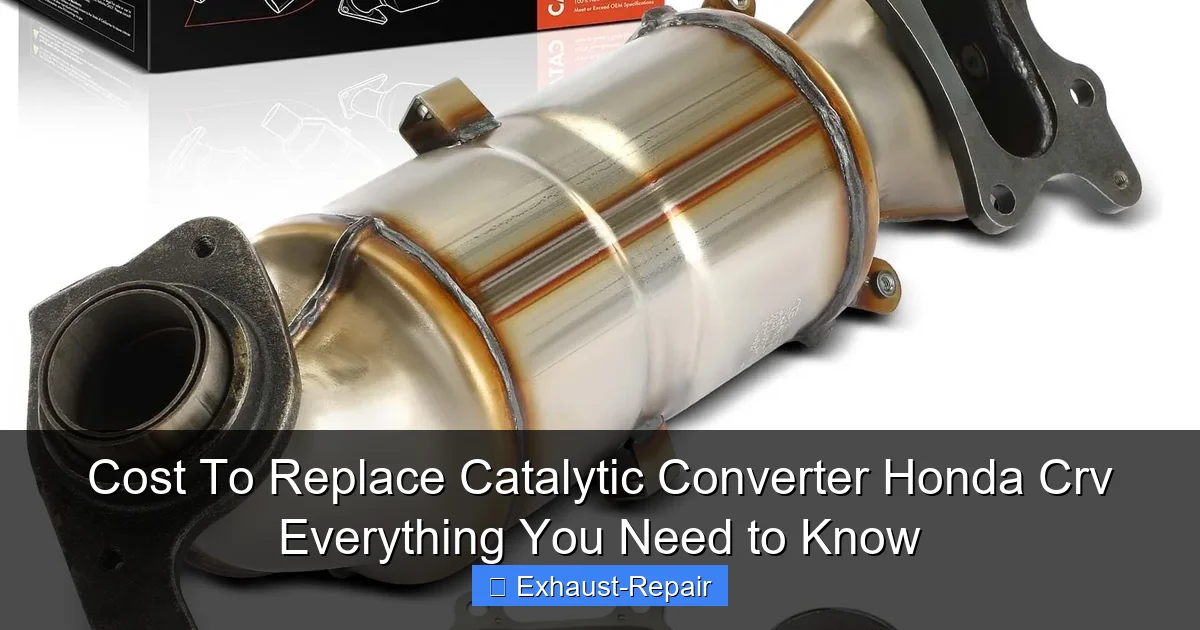
Featured image for cost to replace catalytic converter honda crv
Image source: m.media-amazon.com
Replacing a Honda CR-V’s catalytic converter is a significant investment, typically costing anywhere from $900 to over $2,500, with variations based on part type (OEM vs. aftermarket) and labor. This high price is mainly due to the precious metals contained within the converter, making it a crucial but expensive repair to ensure proper emissions and vehicle performance.
Cost To Replace Catalytic Converter Honda Crv Everything You Need to Know
The dreaded “Check Engine” light: few illuminated symbols on your dashboard can trigger as much anxiety. While it can signify a myriad of issues, one of the most expensive and critical culprits is often a failing catalytic converter. For Honda CR-V owners, known for their vehicle’s reliability and longevity, encountering this problem can be a particularly unwelcome surprise.
A catalytic converter is a vital component of your Honda CR-V’s exhaust system, playing a crucial role in reducing harmful emissions. When it goes bad, it not only impacts your car’s performance and fuel economy but also pollutes the environment and can lead to failed emissions tests. Understanding the nuances of this repair, especially the financial implications, is essential. This comprehensive guide will break down everything you need to know about the cost to replace catalytic converter Honda CRV, helping you navigate this potentially expensive repair with confidence.
From identifying the symptoms to understanding the different types of replacement parts and labor costs, we’ll equip you with the knowledge to make informed decisions and potentially save money. Let’s delve into the specifics of this common, yet complex, exhaust repair.
Key Takeaways
- Average cost: Most pay $1,200-$2,000 for professional CRV replacement.
- OEM costs more: Honda OEM parts ensure fit but double aftermarket prices.
- Labor is significant: Professional installation adds $200-$600, depending on shop rates.
- Aftermarket saves: Quality aftermarket converters offer significant cost savings.
- Theft is common: Check your comprehensive insurance for coverage against theft.
- Diagnostic is key: Confirm converter failure before committing to replacement costs.
- Compare quotes: Shop around for best part and labor prices from multiple mechanics.
Quick Answers to Common Questions
What’s the typical cost to replace a catalytic converter on a Honda CRV?
The average **cost to replace a catalytic converter Honda CRV** typically ranges from $1,500 to $3,500, but it can vary based on your specific CRV model year, whether you choose OEM or aftermarket parts, and labor rates in your area.
Why is replacing a Honda CRV catalytic converter so expensive?
The high cost is primarily due to the precious metals (like platinum, palladium, and rhodium) inside the converter that facilitate the chemical reactions. These rare materials, combined with specialized manufacturing and labor, drive up the price significantly.
How long does it usually take to replace a catalytic converter on a Honda CRV?
For a professional mechanic, the actual replacement process for a Honda CRV catalytic converter can often be completed within 1 to 3 hours. However, your total visit time might be longer due to diagnostics and other related checks.
Can I use an aftermarket catalytic converter to save on replacement costs for my Honda CRV?
Yes, opting for an aftermarket catalytic converter can significantly reduce the **cost to replace catalytic converter Honda CRV**. Just ensure the chosen part is compliant with your local emissions standards and comes from a reputable brand for reliable performance.
What are the common signs that my Honda CRV’s catalytic converter needs replacement?
Keep an eye out for your “Check Engine” light, a noticeable drop in engine power or acceleration, a distinct smell of rotten eggs from the exhaust, or failing an emissions test. These are strong indicators it might be time to investigate the **cost to replace catalytic converter Honda CRV**.
📑 Table of Contents
- Understanding the Catalytic Converter and Its Importance
- Factors Influencing the Cost to Replace Catalytic Converter Honda CRV
- Average Cost Breakdown: Honda CRV Catalytic Converter Replacement
- Data Table: Estimated Cost to Replace Catalytic Converter Honda CRV
- Tips for Managing the Cost and Preventing Future Issues
- Conclusion
Understanding the Catalytic Converter and Its Importance
Before we dive into the expenses, it’s crucial to understand what a catalytic converter does and why it’s so important for your Honda CR-V.
What Does a Catalytic Converter Do?
Often referred to as a “cat,” the catalytic converter is essentially a ceramic honeycomb structure coated with precious metals like platinum, palladium, and rhodium. As exhaust gases from your engine pass through this structure, a chemical reaction occurs, converting harmful pollutants into less toxic substances. Specifically, it transforms:
- Carbon Monoxide (CO) into Carbon Dioxide (CO2)
- Nitrogen Oxides (NOx) into Nitrogen (N2) and Oxygen (O2)
- Unburnt Hydrocarbons (HC) into Water (H2O) and Carbon Dioxide (CO2)
This process is critical for meeting strict environmental regulations and ensuring your vehicle emits cleaner exhaust. Without a functioning catalytic converter, your Honda CR-V would be a significant source of air pollution and would not pass emissions inspections.
Signs of a Failing Catalytic Converter
Knowing the symptoms of a bad catalytic converter can help you address the issue promptly and prevent further damage. Here are the common indicators:
- Check Engine Light: This is the most common sign. Diagnostic codes like P0420 (Catalyst System Efficiency Below Threshold Bank 1) or P0430 (Catalyst System Efficiency Below Threshold Bank 2) are direct indicators of catalytic converter inefficiency.
- Reduced Engine Performance: A clogged catalytic converter restricts exhaust flow, leading to a noticeable loss of power, sluggish acceleration, and reduced fuel economy. Your Honda CR-V might feel like it’s struggling to go uphill.
- Sulfur or “Rotten Egg” Smell: This distinct odor is caused by hydrogen sulfide escaping unburnt from the exhaust, indicating the converter isn’t performing its chemical conversion job properly.
- Rattling Noises: If the internal ceramic honeycomb structure breaks apart, you might hear rattling or clunking noises coming from underneath your CR-V, especially when starting the engine or accelerating.
- Failed Emissions Test: Many states require regular emissions testing. A failing catalytic converter will almost certainly cause your Honda CR-V to fail these tests.
Factors Influencing the Cost to Replace Catalytic Converter Honda CRV
The total cost to replace catalytic converter Honda CRV is not a fixed number. Several factors can significantly influence the final price you’ll pay. Understanding these variables is key to budgeting and making an informed decision.
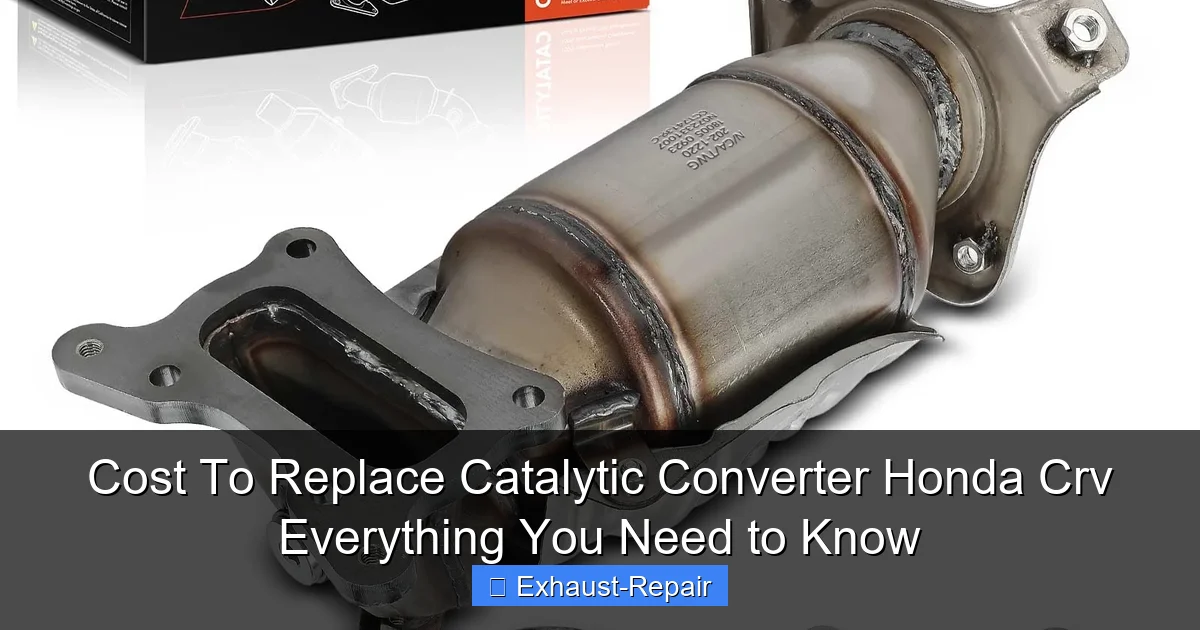
Visual guide about cost to replace catalytic converter honda crv
Image source: m.media-amazon.com
Type of Catalytic Converter
The choice of replacement part is perhaps the biggest determinant of cost:
- OEM (Original Equipment Manufacturer) Converters: These are identical to the part that came with your Honda CR-V from the factory. They offer the best fit, performance, and durability, and are guaranteed to meet all emissions standards. However, they are also the most expensive option.
- Aftermarket Converters: Produced by third-party manufacturers, these are generally more affordable than OEM parts. Quality can vary significantly, so it’s crucial to choose a reputable brand that meets federal and state emissions requirements. Some aftermarket units may not last as long as OEM or perform as efficiently in all scenarios.
- Universal Converters: These are the cheapest option and are designed to be adapted to various vehicles. They typically require welding into your existing exhaust system, increasing labor costs. Compatibility can be an issue, and they may not meet all emissions standards, especially in states with strict regulations like California or New York. They are generally not recommended for a direct replacement for your Honda CR-V’s specific needs.
- Stolen Catalytic Converters: Unfortunately, catalytic converter theft is on the rise due to the value of the precious metals inside. If your CR-V’s converter was stolen, the replacement process and cost will be similar to a standard replacement, but you might also consider additional anti-theft measures.
Honda CRV Model Year and Engine Size
The specific model year and engine configuration of your Honda CR-V play a role. Newer models might have more complex exhaust systems with multiple catalytic converters or integrated designs (e.g., converter built into the exhaust manifold), which can drive up the parts cost. Different engine sizes can also utilize different, sometimes more expensive, converters.
Labor Costs
Labor costs for the Honda CRV catalytic converter replacement cost are influenced by:
- Geographic Location: Repair shops in urban areas or regions with a higher cost of living typically charge more per hour for labor.
- Shop Type: Dealerships generally have higher hourly rates than independent mechanic shops. While a dealership technician might have specialized knowledge of your CR-V, a reputable independent shop can often provide the same quality service at a lower price.
- Complexity of Installation: Most Honda CR-V catalytic converters are bolt-on, making installation relatively straightforward. However, some configurations might require cutting and welding, which adds to labor time and cost.
Additional Repairs
Sometimes, a failing catalytic converter is a symptom of another underlying issue. You might incur additional costs for:
- Oxygen Sensors: Faulty upstream or downstream O2 sensors can cause the catalytic converter to fail or trigger false “Check Engine” lights. It’s often recommended to replace them when replacing the converter.
- Exhaust Leaks: Leaks in the exhaust system upstream of the converter can affect its efficiency and need to be repaired.
- Engine Misfires or Fuel System Issues: A rich fuel mixture or consistent engine misfires can overheat and destroy a catalytic converter. Addressing these root causes is crucial to prevent the new converter from failing prematurely.
- Diagnostic Fees: Most shops will charge a diagnostic fee to accurately pinpoint the problem before starting any repairs.
Average Cost Breakdown: Honda CRV Catalytic Converter Replacement
Let’s get down to the numbers. The cost to replace catalytic converter Honda CRV can range significantly based on the factors discussed above. Here’s an average breakdown:
Parts Cost Estimates
- OEM Catalytic Converter: For many Honda CR-V models, an OEM catalytic converter can cost anywhere from $800 to $2500+. Some specific CR-V models, particularly newer ones or those with integrated manifold converters, can push this price higher.
- Aftermarket Catalytic Converter: A good quality aftermarket converter will typically cost between $300 and $1000. Be cautious of extremely cheap aftermarket options, as their longevity and emissions compliance can be questionable.
- Universal Catalytic Converter: These are the most budget-friendly parts, ranging from $150 to $400. However, remember that welding and fabrication labor will add significantly to the total cost.
Labor Cost Estimates
Replacing a catalytic converter on a Honda CR-V typically requires 1 to 3 hours of labor. With hourly rates ranging from $100 to $200 (or more at dealerships), the labor cost component can be:
- Total Labor: $100 to $600, depending on the shop and complexity.
Total Estimated Cost Range
Combining parts and labor, here’s a general total estimated range for the Honda CRV catalytic converter replacement cost:
- Aftermarket Replacement: Expect to pay anywhere from $400 to $1600. This is often the sweet spot for many CR-V owners looking for a balance of cost and quality.
- OEM Replacement: The total cost for an OEM part will likely fall between $900 and $3100+. For some high-end CR-V models or if multiple converters are involved, the cost could even exceed this range.
- Universal Replacement: While the part is cheap, the added labor for welding often brings the total to a range of $250 to $1000. However, this option is generally discouraged for long-term reliability and emissions compliance.
Data Table: Estimated Cost to Replace Catalytic Converter Honda CRV
To provide a clearer picture, here’s a summary of the estimated costs for your Honda CR-V:
| Type of Converter | Parts Cost Range | Labor Cost Range | Total Estimated Cost Range |
|---|---|---|---|
| OEM (Original Equipment Manufacturer) | $800 – $2500+ | $100 – $600 | $900 – $3100+ |
| Aftermarket | $300 – $1000 | $100 – $600 | $400 – $1600 |
| Universal (Requires Welding) | $150 – $400 | $100 – $600 | $250 – $1000 |
*Note: These are estimates and can vary based on specific CR-V model year, engine, location, and individual shop pricing.
Tips for Managing the Cost and Preventing Future Issues
Replacing a catalytic converter is a significant expense, but there are ways to manage the cost to replace catalytic converter Honda CRV and potentially avoid future problems.
Get Multiple Quotes
Always get at least three quotes from different repair facilities. This could include a Honda dealership, a reputable independent mechanic specializing in import vehicles, and a dedicated exhaust shop. Compare not just the total price, but also the type of part being used (OEM vs. aftermarket) and the warranty offered on parts and labor. This due diligence can save you hundreds of dollars on your Honda CRV catalytic converter replacement cost.
Consider Aftermarket Options Carefully
If budget is a primary concern, a quality aftermarket catalytic converter can be a viable option. However, do your research. Ensure the aftermarket part is specifically designed for your Honda CR-V model and meets all local and federal emissions standards (e.g., California ARB certified if you live in a CARB state). Read reviews and choose a brand known for reliability. Don’t simply opt for the cheapest option, as it might lead to premature failure and another costly repair down the line.
Address the Root Cause
A catalytic converter rarely fails without an underlying reason. Common culprits include consistent engine misfires, a rich fuel mixture, burning oil, or coolant contamination reaching the converter. If these issues aren’t resolved before installing a new converter, the new unit will likely fail prematurely. Insist that your mechanic thoroughly diagnose and fix any underlying engine problems to prevent a recurrence of the high cost to replace catalytic converter Honda CRV.
Regular Maintenance is Key
Proactive maintenance is the best defense against catalytic converter failure. Follow your Honda CR-V’s recommended service schedule for:
- Oil Changes: Regular oil changes prevent oil burning, which can clog the converter.
- Spark Plug Replacement: Worn spark plugs can cause misfires.
- Fuel System Cleaning: Keeping the fuel system clean helps maintain proper air/fuel ratios.
- Oxygen Sensor Checks: Ensuring O2 sensors are functioning correctly helps the engine manage emissions and protects the converter.
Catalytic Converter Protection
In some regions, catalytic converter theft is a serious concern. If you live in or frequently visit high-risk areas, consider installing an anti-theft device designed to make it harder for thieves to remove the converter from your Honda CR-V. These devices can add to the upfront cost but might save you from the expensive and inconvenient experience of a stolen catalytic converter replacement.
Conclusion
Discovering that your Honda CR-V needs a new catalytic converter can be daunting, both for your vehicle’s health and your wallet. As we’ve explored, the cost to replace catalytic converter Honda CRV is highly variable, ranging from a few hundred dollars for an aftermarket part and basic labor to over $3,000 for an OEM replacement in certain circumstances.
Understanding the factors that influence this cost – from the type of part chosen to labor rates and potential additional repairs – empowers you to make an informed decision. Remember to always seek multiple quotes, carefully consider aftermarket options, and most importantly, ensure any underlying engine issues are addressed to prevent future failures. By staying proactive with maintenance and making smart choices, you can effectively manage the expense and keep your reliable Honda CR-V running cleanly and efficiently for years to come.
Frequently Asked Questions
How much does it typically cost to replace a catalytic converter on a Honda CRV?
The average cost to replace a catalytic converter on a Honda CRV can range significantly, usually between $1,500 and $3,500. This price includes both the parts and labor, but can vary based on the specific year of your CRV, the type of converter, and your geographic location.
Why is replacing a catalytic converter on a Honda CRV so expensive?
The high cost is primarily due to the precious metals (platinum, palladium, rhodium) contained within the catalytic converter, which are crucial for converting harmful exhaust gases into less toxic pollutants. Labor costs also contribute, as the replacement can be a moderately complex job depending on accessibility.
Are there cheaper options for replacing my Honda CRV’s catalytic converter, like aftermarket parts?
Yes, aftermarket catalytic converters are generally less expensive than OEM (Original Equipment Manufacturer) parts for your Honda CRV. While they can save you money upfront, it’s important to ensure the aftermarket part meets local emissions standards and is installed by a reputable mechanic for proper fit and function.
What are the common signs that my Honda CRV’s catalytic converter needs replacement?
Key indicators include a “Check Engine” light illuminated on your dashboard, decreased engine performance, reduced fuel economy, and a sulfur or rotten egg smell from the exhaust. You might also experience rattling noises from underneath your CRV.
Can I continue to drive my Honda CRV if the catalytic converter is failing?
While you might be able to drive for a short period, it’s not recommended to continue driving with a failing catalytic converter in your Honda CRV. This can lead to further engine damage, significantly reduced fuel efficiency, and your vehicle will fail emissions tests, which are mandatory in many areas.
How long does it take a mechanic to replace a catalytic converter on a Honda CRV?
The actual labor time for a professional mechanic to replace a catalytic converter on a Honda CRV typically ranges from 1 to 3 hours. However, the total time your vehicle spends at the shop might be longer, depending on the shop’s schedule and other potential issues discovered during inspection.