36 Pentastar Head Replacement Cost 2025 Updated

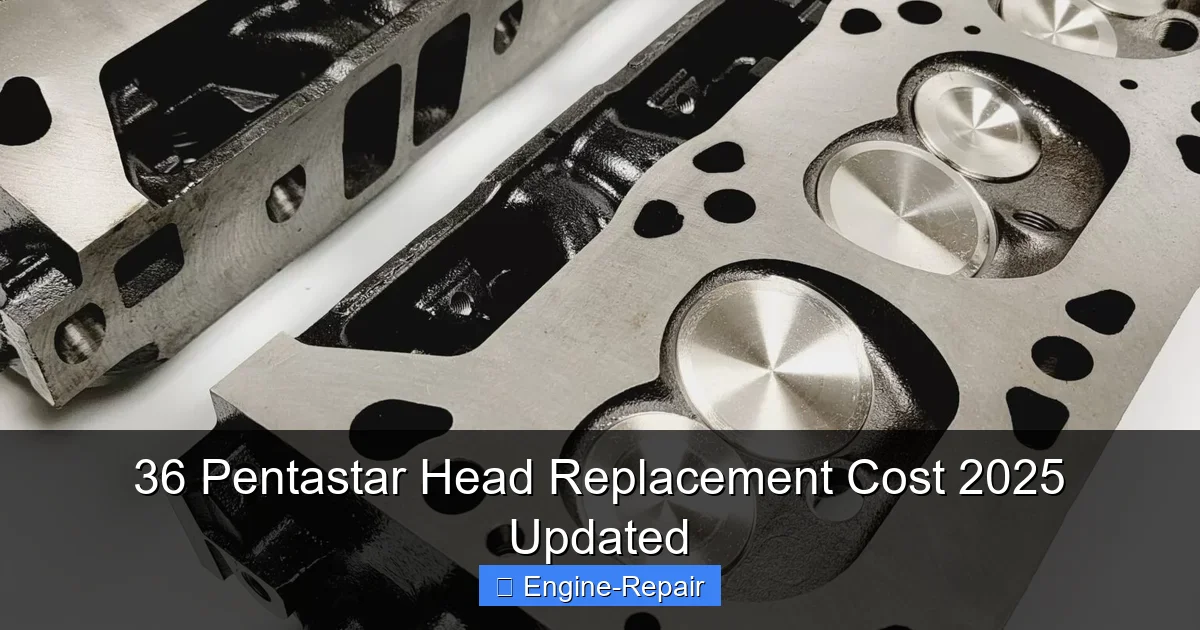
Featured image for 36 pentastar head replacement cost
Image source: modernmusclextreme.com
A 2025 Pentastar head replacement can be a significant investment, with costs typically ranging from $2,000 to over $4,000, largely influenced by labor rates, parts quality (OEM vs. aftermarket), and the specific repair shop. Understanding these variables is crucial to budgeting for this essential repair, which addresses common issues to restore engine performance and reliability.
3.6 Pentastar Head Replacement Cost 2025 Updated
The 3.6L Pentastar engine has been a workhorse for Chrysler, Dodge, Jeep, and Ram vehicles for over a decade. Known for its robust performance, fuel efficiency, and widespread application across various models from minivans to Wranglers, it’s undeniably one of the most common powerplants on the road today. However, like any complex mechanical system, the Pentastar isn’t without its specific vulnerabilities, and one of the more significant — and costly — issues that can arise involves the cylinder heads.
If you’re reading this, you might be experiencing misfires, rough idling, or a dreaded P0300 series trouble code, pointing towards an issue with your 3.6 Pentastar engine’s cylinder head. Often, the resolution for these problems is a full 3.6 Pentastar head replacement. As we look towards 2025, understanding the financial implications of this repair is crucial for vehicle owners. This comprehensive guide will break down the expected 3.6 Pentastar head replacement cost, factors that influence it, and practical tips to navigate this significant engine repair.
Key Takeaways
- Budget for 2025: Expect $2,500 to $4,500 for replacement.
- Labor is significant: Up to 70% of total cost is labor.
- Independent shops save: Dealers typically charge much higher rates.
- DIY offers big savings: Halve costs by performing work yourself.
- Always get multiple quotes: Compare shops for the best value.
- Prompt diagnosis is key: Address misfires early to prevent damage.
- Quality parts matter: Use OEM or reputable aftermarket components.
Quick Answers to Common Questions
What’s the typical cost for a 3.6 Pentastar head replacement?
Generally, expect to pay anywhere from $2,500 to $4,500 for a 3.6 Pentastar head replacement, depending on your location, shop rates, and whether one or both cylinder heads need replacing. This estimate usually covers both parts and the significant labor involved.
Why is the 3.6 Pentastar head replacement so expensive?
The high cost of a 3.6 Pentastar head replacement stems from the extensive labor required to access and replace the cylinder heads, which often takes 10-15 hours or more. Additionally, specialized parts and tools contribute to the overall price tag for this complex repair.
Are certain model years more prone to 3.6 Pentastar head issues?
Yes, earlier generations of the 3.6L Pentastar engine, particularly those found in vehicles from roughly 2011-2013, were more commonly affected by cylinder head failures. Newer versions have seen design improvements to mitigate these issues, but it’s always wise to check your specific model’s history.
Can I save money by attempting a DIY 3.6 Pentastar head replacement?
While technically possible, a DIY 3.6 Pentastar head replacement is a highly complex and time-consuming repair recommended only for experienced mechanics with specialized tools and knowledge. Mistakes can lead to severe engine damage, often making professional service the safer and ultimately more economical choice.
What are the common signs that indicate I might need a 3.6 Pentastar head replacement?
Look out for symptoms like a persistent check engine light, engine misfires (especially on cylinders #2 or #5), unexplained coolant loss, white smoke from the exhaust, or an overheating engine. If you notice these, it’s crucial to get your vehicle inspected promptly to address the potential 3.6 Pentastar head issue.
📑 Table of Contents
- Understanding the 3.6 Pentastar Engine and Its Common Head Issues
- Factors Influencing 3.6 Pentastar Head Replacement Cost
- Estimated 3.6 Pentastar Head Replacement Cost Breakdown for 2025
- DIY vs. Professional 3.6 Pentastar Head Replacement
- Tips for Managing and Reducing Your 3.6 Pentastar Head Replacement Expenses
- What to Expect During the Head Replacement Process
- Conclusion
Understanding the 3.6 Pentastar Engine and Its Common Head Issues
The 3.6L Pentastar V6 engine made its debut in 2011 models and quickly became a staple across numerous Stellantis (formerly FCA) vehicles. Its variable valve timing (VVT) and sophisticated design offered a blend of power and efficiency that resonated with consumers. Despite its overall reliability, certain early generations of the engine, particularly those manufactured between 2011 and 2013 (though issues can appear in later models), developed a known propensity for cylinder head failures.
A Brief History of the Pentastar Cylinder Head Problem
The core of the problem often lies with the driver’s side (left) cylinder head, though the passenger’s side can also be affected. The issue is generally attributed to premature wear of the valve guides and seats, leading to poor valve sealing, misfires, and ultimately, a check engine light. Chrysler initiated extended warranties and even recalls for specific VIN ranges, but many vehicles outside these parameters or past their warranty period still encounter the issue, necessitating a 3.6 Pentastar head replacement.
Identifying Common Cylinder Head Problems
Recognizing the symptoms early can prevent further damage and help you prepare for a potential 3.6 Pentastar head replacement. Look out for:
- Persistent Misfires: A common symptom, especially in cylinder #2, #4, or #6 (on the driver’s side). You might feel a noticeable shudder or vibration.
- Check Engine Light: Accompanied by diagnostic trouble codes (DTCs) such as P0300 (random misfire), P0302, P0304, P0306 (specific cylinder misfires).
- Rough Idling: The engine may run unevenly, especially when stopped or in neutral.
- Reduced Engine Performance: A noticeable drop in power and acceleration.
- Increased Oil Consumption: Though less common as a direct symptom of head wear, it can sometimes be related if seals are compromised.
- Ticking Noise: Worn rocker arms or lifters can also cause ticking and contribute to valve train issues that might necessitate a 3.6 Pentastar head replacement.
Factors Influencing 3.6 Pentastar Head Replacement Cost
The total 3.6 Pentastar head replacement cost isn’t a single fixed number; it’s a sum of several variables. Understanding these factors will help you budget accurately and make informed decisions about your repair.
Visual guide about 36 pentastar head replacement cost
Image source: cylinder-heads.com
Labor Costs
Labor is often the most significant component of the 3.6 Pentastar head replacement cost. This is a time-intensive repair, requiring disassembly of a substantial portion of the top end of the engine. Factors influencing labor include:
- Geographic Location: Labor rates vary significantly by region, with urban areas typically having higher costs than rural ones.
- Type of Repair Shop: Dealerships generally charge higher hourly rates than independent repair shops. While dealerships offer brand-specific expertise and OEM parts, a reputable independent shop can often provide quality work for less.
- Technician Expertise: A seasoned technician familiar with the Pentastar engine can complete the job more efficiently, but their hourly rate might reflect their specialization.
Parts Costs
The cylinder head itself is a major part expense, but it’s not the only one. Other necessary components add to the overall 3.6 Pentastar head replacement cost:
- Cylinder Head Type: You’ll have options:
- OEM (Original Equipment Manufacturer): These are genuine Mopar parts, designed to exact factory specifications. They are typically the most expensive but offer peace of mind regarding fit and quality.
- Aftermarket: Various manufacturers produce cylinder heads compatible with the Pentastar. Quality can vary, so research reputable brands. They are generally more affordable than OEM.
- Remanufactured/Rebuilt: These heads have been previously used but reconditioned to meet specifications. They are often a cost-effective choice, but ensure they come from a reputable rebuilder with a good warranty.
- Gaskets and Seals: A complete gasket kit (head gasket, valve cover gasket, intake manifold gasket, exhaust manifold gasket) is essential for a proper seal.
- Head Bolts: These are typically “torque-to-yield” bolts and must be replaced after removal.
- Fluids: New engine oil and coolant will be needed after the repair.
- Additional Components: Depending on the severity of the issue, you might need new spark plugs, ignition coils, or even rocker arms and lifters if they were damaged due to the head issue.
Additional Repairs and Vehicle Specifics
Sometimes, what starts as a simple 3.6 Pentastar head replacement can uncover other issues. The vehicle’s specific make and model can also play a role; for example, engine access might be tighter in a Jeep Wrangler than a Dodge Grand Caravan, potentially increasing labor time.
Estimated 3.6 Pentastar Head Replacement Cost Breakdown for 2025
Forecasting costs for 2025 involves accounting for inflation and the continuing demand for these repairs. Below is an estimated breakdown of the 3.6 Pentastar head replacement cost.
Parts Cost Estimates (2025)
- New OEM Cylinder Head (single): $600 – $1,200 (depending on supplier and specific part number). If both heads need replacement, double this.
- New Aftermarket Cylinder Head (single): $400 – $900
- Remanufactured Cylinder Head (single): $350 – $800
- Gasket Set & Head Bolts: $150 – $350
- Fluids (Oil, Coolant): $50 – $150
- Misc. Small Parts (Spark plugs, etc.): $50 – $200 (if needed)
Total Estimated Parts Cost: $600 – $1,900 (for a single head replacement, depending on chosen part quality and additional components).
Labor Cost Estimates (2025)
This is a major repair. The standard labor time for a single cylinder head replacement on a 3.6 Pentastar engine typically ranges from 10 to 18 hours, depending on the vehicle and technician efficiency. With average labor rates expected to be between $120 and $180 per hour in 2025, here’s the breakdown:
- Independent Shop Labor: 10-18 hours @ $120-$150/hour = $1,200 – $2,700
- Dealership Labor: 10-18 hours @ $150-$180+/hour = $1,500 – $3,240+
Total Estimated 3.6 Pentastar Head Replacement Cost Range (2025)
Combining parts and labor, the overall 3.6 Pentastar head replacement cost can range significantly:
| Cost Category | Independent Shop (Estimated Range) | Dealership (Estimated Range) |
|---|---|---|
| Parts (single head, incl. gaskets/fluids) | $600 – $1,500 | $800 – $1,900 |
| Labor (10-18 hours) | $1,200 – $2,700 | $1,500 – $3,240 |
| Total Estimated 3.6 Pentastar Head Replacement Cost | $1,800 – $4,200 | $2,300 – $5,140+ |
Note: These are estimates for a single head replacement. If both heads need attention, or if additional components like lifters, rocker arms, or camshafts are significantly worn, the cost could be substantially higher. Always get a detailed quote.
DIY vs. Professional 3.6 Pentastar Head Replacement
When faced with a significant 3.6 Pentastar head replacement cost, some mechanically inclined individuals might consider tackling the job themselves. However, this is not a repair for the faint of heart or the inexperienced.
The DIY Perspective
Pros:
- Significant Labor Savings: This is the primary motivator for DIYers, potentially cutting the 3.6 Pentastar head replacement cost by more than half.
- Learning Experience: A deep understanding of your engine.
Cons:
- Complexity: This involves precise timing, torque specifications, and intricate disassembly/reassembly. Errors can lead to catastrophic engine failure.
- Specialized Tools: You’ll need torque wrenches (including angle-specific ones), valve spring compressors, possibly a harmonic balancer puller, and diagnostic tools.
- Time Commitment: This can take days, or even weeks, for an amateur.
- Risk of Further Damage: Improper installation of gaskets, mis-timed camshafts, or incorrect bolt torquing can cause leaks, misfires, or severe engine damage.
- No Warranty: If something goes wrong after your DIY repair, you’re solely responsible.
The Professional Advantage
Opting for a professional 3.6 Pentastar head replacement ensures:
- Expertise and Experience: Trained technicians have the knowledge and specialized tools to perform the repair correctly and efficiently.
- Warranty on Parts and Labor: Most reputable shops offer a warranty (typically 12-24 months or 12,000-24,000 miles) on their work, providing peace of mind.
- Efficiency: Professionals can usually complete the repair much faster, getting your vehicle back on the road sooner.
- Proper Diagnosis: Before the repair, a professional can accurately diagnose if the head is indeed the problem or if another component is failing.
Practical Tip: Unless you are an experienced automotive technician with the right tools and resources, a 3.6 Pentastar head replacement is best left to professionals to ensure the job is done right and comes with a warranty.
Tips for Managing and Reducing Your 3.6 Pentastar Head Replacement Expenses
While a 3.6 Pentastar head replacement cost can be substantial, there are ways to manage and potentially reduce the financial burden.
Get Multiple Quotes
Don’t settle for the first estimate. Contact at least three different repair shops (a dealership and a couple of independent specialists) to compare their quoted 3.6 Pentastar head replacement cost. Ensure each quote includes a detailed breakdown of parts and labor.
Consider Aftermarket or Remanufactured Parts
While OEM parts offer guaranteed quality, reputable aftermarket or remanufactured cylinder heads can significantly lower your parts cost without sacrificing too much reliability. Always discuss part options and their associated warranties with your mechanic.
Ask About Warranties
A good warranty on both parts and labor is crucial. Understand what it covers and for how long. This protects you in case of any issues after the 3.6 Pentastar head replacement.
Maintain Your Vehicle Proactively
While some Pentastar head issues are manufacturing defects, proper maintenance can prevent *other* engine problems from complicating the repair. Regular oil changes, coolant flushes, and addressing minor issues promptly can help ensure your engine remains in the best possible condition, reducing the chance of collateral damage when a head replacement becomes necessary.
Is It Worth Repairing?
Before committing to a high 3.6 Pentastar head replacement cost, evaluate the overall value of your vehicle. Consider its age, mileage, condition, and current market value. If the repair cost approaches or exceeds the vehicle’s worth, it might be more financially prudent to consider selling it (as-is, with full disclosure) or trading it in towards a newer, more reliable vehicle.
What to Expect During the Head Replacement Process
Knowing what the repair entails can help alleviate anxiety and ensure you communicate effectively with your mechanic about your 3.6 Pentastar head replacement.
Diagnosis and Initial Assessment
The process begins with a thorough diagnostic assessment. The mechanic will use scan tools to read trouble codes, perform compression tests, leak-down tests, and potentially use a borescope to inspect cylinders. This confirms that the cylinder head is indeed the problem and identifies which head(s) need attention.
Disassembly and Inspection
Once diagnosed, the engine’s top end will be disassembled. This involves removing the intake manifold, fuel rails, valve covers, spark plugs, ignition coils, exhaust manifolds, and importantly, the timing chain components to access the cylinder head bolts. The removed head will then be inspected for cracks, warpage, or severe valve train wear.
Head Installation and Reassembly
The new or remanufactured cylinder head is installed with new head gaskets and head bolts. Critical steps include ensuring correct timing chain alignment and precisely torquing all bolts to factory specifications. This phase also involves reinstalling all removed components, replacing necessary gaskets and seals, and refilling fluids.
Post-Repair Testing
After reassembly, the engine will be filled with fresh oil and coolant. The vehicle will then undergo several tests: a leak check, an initial startup to listen for any abnormal noises, and then a thorough road test. The mechanic will also clear any lingering diagnostic codes and ensure the engine runs smoothly, confirming the success of the 3.6 Pentastar head replacement.
Conclusion
Facing a 3.6 Pentastar head replacement cost can be daunting, but it’s a relatively common issue for this engine. By understanding the underlying problems, the factors influencing the cost, and having a clear breakdown of potential expenses, you can make an informed decision for your vehicle’s future. For 2025, expect the total cost to range anywhere from $1,800 to over $5,000, depending on where you live, the parts you choose, and the shop you select.
While the investment is significant, a properly executed 3.6 Pentastar head replacement can give your vehicle many more years of reliable service. Don’t hesitate to seek multiple opinions, compare quotes, and always prioritize quality parts and experienced technicians to ensure your beloved Pentastar-powered vehicle runs smoothly for the road ahead.
Frequently Asked Questions
What is the estimated 36 Pentastar head replacement cost in 2025?
The average 36 Pentastar head replacement cost can range significantly, typically falling between $2,000 and $4,500. This estimate includes both the price of the cylinder head itself and the extensive labor required for installation, which can vary based on your geographic location and the specific shop.
What factors can influence the total 36 Pentastar cylinder head replacement cost?
Several factors impact the final cost, including whether you opt for an OEM, aftermarket, or remanufactured cylinder head, as well as the labor rates of the repair shop. Additional repairs, such as replacing gaskets, bolts, or other components found to be worn during the process, can also add to the overall expense.
How do I know if I need a 36 Pentastar head replacement? What are the common symptoms?
Common symptoms indicating a potential need for a 36 Pentastar head replacement include persistent engine overheating, unexplained coolant loss, misfires or rough idling, and white smoke from the exhaust. You might also notice coolant in your engine oil (milky oil) or oil in your coolant reservoir.
Is it advisable to attempt a DIY 36 Pentastar head replacement to reduce costs?
While a DIY approach could potentially save on labor costs, replacing a 36 Pentastar cylinder head is a complex and highly technical job that requires specialized tools and significant automotive expertise. Improper installation can lead to further engine damage, making professional repair generally the more reliable and ultimately cost-effective option.
Can you break down the typical 36 Pentastar head replacement cost between parts and labor?
Generally, the parts for a 36 Pentastar head replacement, including the cylinder head itself and associated gaskets, can account for about 30-50% of the total cost. The remaining 50-70% is typically attributed to labor, as the process is very time-intensive, often requiring 10-15 hours or more of skilled mechanic work.
What is the expected lifespan after a 36 Pentastar head replacement, and does it come with a warranty?
With proper installation and maintenance, a new or quality remanufactured 36 Pentastar cylinder head should provide many years and tens of thousands of miles of reliable service. Reputable repair shops and parts manufacturers often offer warranties, typically ranging from 12 months/12,000 miles to 3 years/unlimited miles, on both parts and labor for the replacement.