Mini Cooper high pressure fuel pump replacement cost guide
Mini Cooper high pressure fuel pump replacement typically costs between $900 and $1,600, depending on your model year, labor rates, and whether you choose OEM or aftermarket parts. Understanding symptoms of a failing pump—like rough idling, loss of power, or hard starts—can help you fix the issue early, avoid breakdowns, and potentially save hundreds on additional engine repairs.
Mini Cooper high pressure fuel pump replacement cost guide
If your Mini Cooper is hesitating, losing power, or throwing fuel pressure codes, it can be scary. You love the way your Mini drives, and now it feels like it is letting you down. One common culprit, especially on turbo models, is the high pressure fuel pump.
The big question that hits right away is: how much is this going to cost me? The answer is not always simple, but once you break it down, it feels a lot less overwhelming. That is what this guide is for.
In this Mini Cooper high pressure fuel pump replacement cost guide, we will walk through what the pump does, how to spot early signs of trouble, what you should expect to pay, and where you can save money without cutting corners. Think of it like a chat with a friend who has already been through the repair and wants to help you avoid surprises.
Key Takeaways
- Expect total costs between $900–$1,600 including parts, labor, diagnostics, and shop fees.
- OEM pumps cost more but last longer than many aftermarket options, reducing repeat replacement risk.
- Labor time usually runs 2–4 hours depending on model year, engine layout, and shop experience.
- Early symptoms save money—address hard starts, misfires, and power loss before pump failure worsens.
- Always get a written estimate detailing parts, labor rate, and warranty before approving fuel pump work.
- Compare dealer vs independent shops—dealers charge more hourly, but independents may use cheaper parts.
- Ask for old parts back to verify replacement was done and confirm correct high-pressure pump used.
Quick Answers to Common Questions
How much does a Mini Cooper high pressure fuel pump replacement cost?
On most Mini models, a Mini Cooper high pressure fuel pump replacement cost typically ranges from $900 to $1,600, including parts and labor, depending on model year and where you have the work done.
What affects the Mini Cooper high pressure fuel pump replacement cost?
The Mini Cooper high pressure fuel pump replacement cost is mainly driven by your specific engine/model, whether you use OEM or aftermarket parts, and local labor rates at the shop or dealership.
Is it cheaper to replace a Mini Cooper high pressure fuel pump at an independent shop than at a dealer?
Yes, the Mini Cooper high pressure fuel pump replacement cost is usually lower at a trusted independent European specialist than at a Mini dealership, often saving you a few hundred dollars in labor.
Can I drive with a failing Mini Cooper high pressure fuel pump to avoid the replacement cost?
Driving with a failing pump can cause stalling, poor performance, and potential engine damage, so it’s better to address the Mini Cooper high pressure fuel pump replacement cost early than risk a bigger repair bill later.
Does warranty or extended coverage help with Mini Cooper high pressure fuel pump replacement cost?
If your car is still under factory or extended warranty, some or all of the Mini Cooper high pressure fuel pump replacement cost may be covered, so it’s worth checking your coverage before paying out of pocket.
📑 Table of Contents
- Understanding the Mini Cooper high pressure fuel pump
- Common symptoms and when replacement makes sense
- Mini Cooper high pressure fuel pump replacement cost breakdown
- Cost comparison table: parts and labor at a glance
- Saving money on Mini Cooper high pressure fuel pump replacement
- Practical tips to avoid future HPFP headaches
- Conclusion: making peace with HPFP replacement costs
Understanding the Mini Cooper high pressure fuel pump
What the high pressure fuel pump actually does
Modern Mini Coopers with direct injection use two fuel pumps:
- Low pressure pump in or near the tank
- High pressure fuel pump (HPFP) on the engine
The low pressure pump sends fuel from the tank to the engine. The high pressure fuel pump then boosts that fuel to very high pressure so it can be sprayed directly into the cylinders. This helps with power, fuel economy, and emissions.
When the HPFP starts to fail, the engine does not get the pressure it needs. That is when you feel rough running, hard starting, or loss of power. Because the pump is driven by the engine, it lives a hard life with heat, vibration, and constant load. Over time, it wears out.
Why Minis are known for HPFP issues
Some Mini Cooper engines have a bit of a reputation when it comes to high pressure fuel pumps. This is especially true for:
- R56 Mini Cooper S (around 2007–2013)
- Other turbocharged direct-injection Minis from similar years
On these cars, the HPFP can fail earlier than many owners expect. That does not mean every pump will die young, but it does mean you are not alone if yours is acting up. Knowing the common symptoms and costs puts you in a stronger position when you talk to a shop.
Common symptoms and when replacement makes sense
Warning signs of a failing high pressure fuel pump
Before you even think about Mini Cooper high pressure fuel pump replacement cost, it helps to be sure the pump is actually the problem. Here are some common signs:
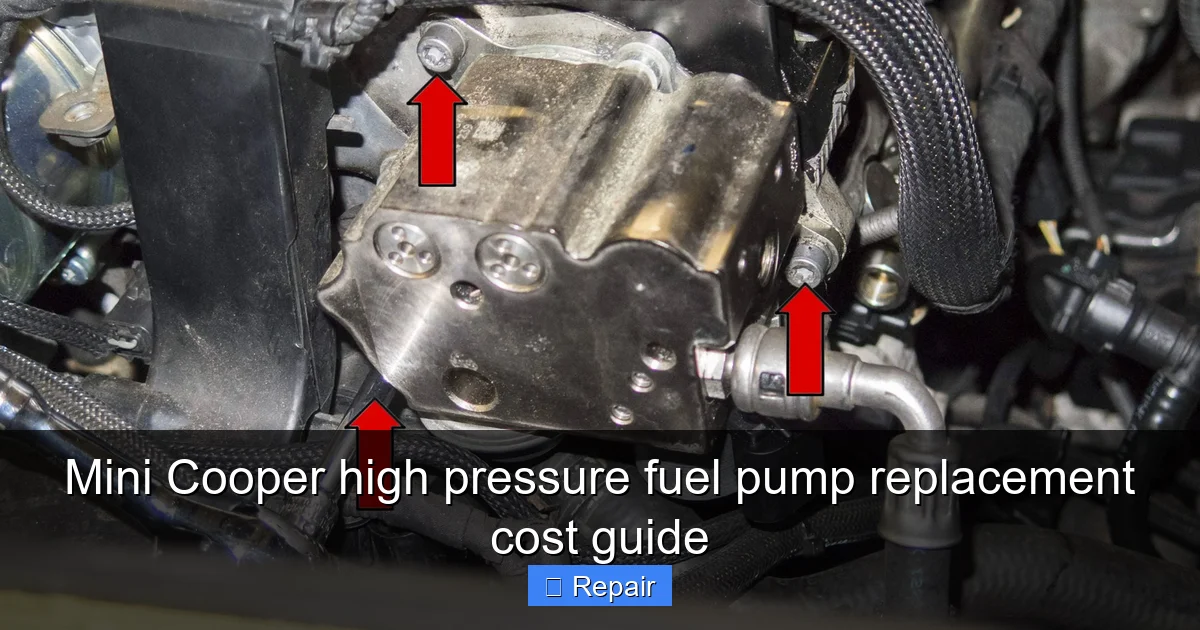
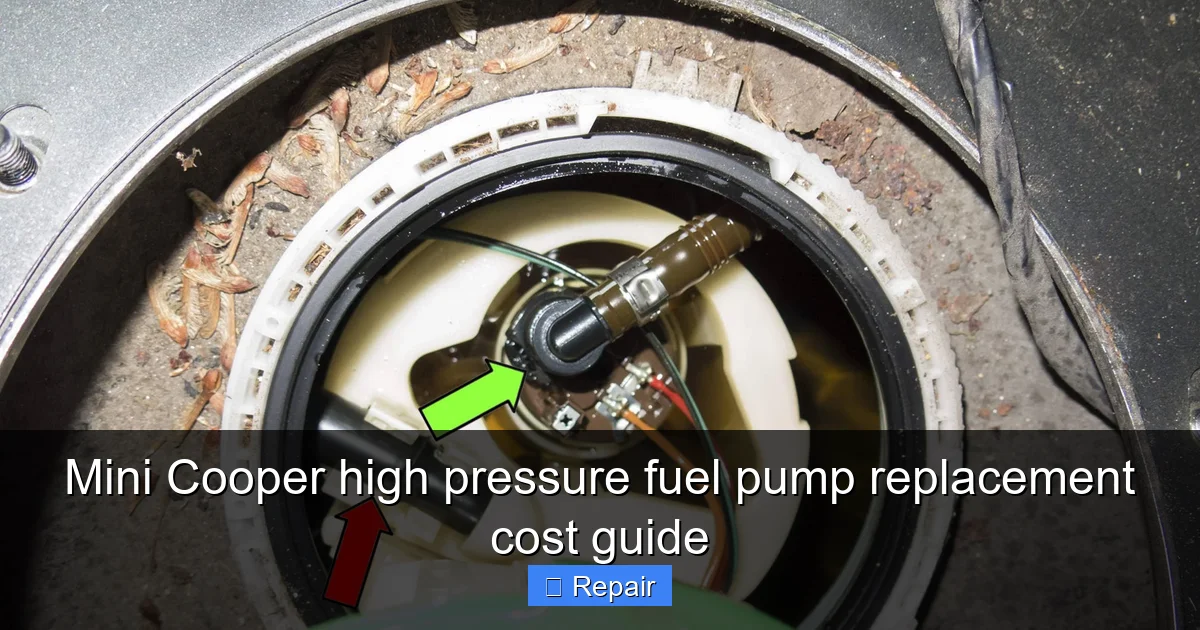
Visual guide about mini cooper high pressure fuel pump replacement cost
Image source: cdn4.pelicanparts.com
- Long crank or hard starting when the engine is hot or cold
- Rough idle that feels like the engine is stumbling
- Loss of power, especially under hard acceleration
- Engine misfire codes or fuel pressure codes from a scan tool
- Check engine light comes on and stays on
- Car goes into limp mode and will not rev normally
These symptoms can also point to other problems, like injectors or ignition coils. That is why a proper diagnosis is important. But if your Mini is showing more than one of these signs, the HPFP becomes a strong suspect.
How shops diagnose HPFP problems
A good shop will usually:
- Scan for codes and look for fuel pressure related faults
- Check actual fuel pressure data while the engine runs
- Rule out simple issues like clogged filters or bad sensors
Sometimes the pump is clearly dead. Other times it is weak and only fails when the engine is hot or under load. That is why test drives and live data are so important. Do not be afraid to ask the shop how they reached the diagnosis. A good mechanic will explain it in simple terms.
When you should replace the pump
In most cases, once the high pressure fuel pump starts to fail, it is best to replace it rather than try to limp along. Reasons include:
- It can leave you stranded at a bad time
- Repeated hard starts and misfires can stress other parts
- You may end up paying twice in diagnostic time if you wait
If you plan to keep your Mini for a while, a fresh HPFP is more like an investment in reliability. The key is knowing the Mini Cooper high pressure fuel pump replacement cost ahead of time so the bill does not knock the wind out of you.
Mini Cooper high pressure fuel pump replacement cost breakdown
Typical price range for HPFP replacement
The total Mini Cooper high pressure fuel pump replacement cost usually falls into these rough ranges:
- Independent shop: about $700 to $1,400 total
- Mini/BMW dealer: about $1,000 to $1,800 total
- DIY (parts only): about $350 to $900 depending on part choice
The numbers vary a lot because of:
- Model year and engine type
- Where you live (labor rates change by region)
- Whether you use OEM, aftermarket, or remanufactured parts
Think of these as ballpark figures. The good news is, once you understand how the cost splits between parts and labor, it is easier to compare quotes.
Parts cost: OEM vs aftermarket
The high pressure fuel pump is not a cheap part. Here is how the pricing usually looks:
- OEM Mini/BMW pump: about $500 to $900
- Quality aftermarket pump: about $350 to $700
- Remanufactured pump: about $300 to $600
OEM often comes with a better warranty and a known fit. Aftermarket can save money, but quality varies. If a quote looks much cheaper than others, ask what brand of pump they are using and what warranty it carries.
Labor cost: how many hours should you pay for?
Labor for Mini Cooper high pressure fuel pump replacement is usually:
- Labor time: about 2 to 4 hours on most models
- Hourly rate: about $90 to $200 per hour depending on location and shop type
That means labor alone often runs between $200 and $800. Dealers tend to be on the higher end, while a trusted independent shop can be more budget friendly.
Sample cost scenarios
To make all this more real, here are a few example scenarios:
- Example 1 – Independent shop, OEM part
Parts: $650 (OEM HPFP)
Labor: 3 hours at $120/hr = $360
Shop fees/tax: $60
Total: about $1,070 - Example 2 – Dealer, OEM part
Parts: $800 (OEM HPFP)
Labor: 3 hours at $180/hr = $540
Shop fees/tax: $80
Total: about $1,420 - Example 3 – DIY with aftermarket part
Parts: $450 (aftermarket HPFP)
New seals/bolts: $40
Total out-of-pocket: about $490 (plus your time and tools)
Cost comparison table: parts and labor at a glance
Estimated Mini Cooper HPFP replacement costs
Use this table as a quick reference when you get quotes. It is not exact for every Mini, but it gives you a solid starting point.
| Option | Parts Type | Estimated Parts Cost | Estimated Labor Time | Estimated Labor Cost | Typical Total Cost |
|---|---|---|---|---|---|
| Dealer service | OEM Mini/BMW | $700 – $900 | 2.5 – 4 hours | $450 – $800 | $1,150 – $1,800 |
| Independent shop | OEM or quality aftermarket | $450 – $800 | 2 – 3.5 hours | $200 – $500 | $700 – $1,400 |
| DIY repair | Aftermarket or reman | $300 – $700 | Your time | $0 | $300 – $700 |
When you look at your own Mini Cooper high pressure fuel pump replacement cost, try to match your quote to one of these rows. If the number is way outside the range, ask for a detailed breakdown so you can see where the extra money is going.
Saving money on Mini Cooper high pressure fuel pump replacement
Compare quotes the smart way
Do not jump at the first quote you get. Instead:
- Call at least two or three shops
- Ask for a written estimate with parts and labor listed separately
- Confirm the brand of the high pressure fuel pump they plan to use
- Ask about warranty on parts and labor
Sometimes the cheapest quote is not the best deal. A slightly higher price from a shop with a strong warranty and good reviews can save you money if anything goes wrong later.
OEM vs aftermarket: where to draw the line
Using an OEM pump is often the safest choice, but it is not your only option. Here is a simple way to think about it:
- Choose OEM if you want maximum peace of mind and plan to keep the car long term.
- Choose a known aftermarket brand if you want to save some cash but still get a solid part.
- Be cautious with unknown brands that have little to no track record or warranty.
If you are not sure, ask the shop which brands they trust and how often they see failures. A good mechanic will be honest about what has worked for their other Mini customers.
Check for warranties, recalls, or goodwill help
Before you pay full Mini Cooper high pressure fuel pump replacement cost out of pocket, check a few things:
- Existing warranty: If your Mini is still under factory or extended warranty, the pump may be covered.
- Service bulletins or recalls: Some HPFP issues have been covered under special programs in the past. It is worth asking a dealer to check your VIN.
- Goodwill assistance: Even if you are out of warranty, a dealer may offer partial coverage if the car is low mileage and has a full service history.
It never hurts to ask. The worst they can say is no, and sometimes you get a pleasant surprise.
DIY: is it worth tackling yourself?
If you are handy with tools, you might think about doing the job yourself to cut down your Mini Cooper high pressure fuel pump replacement cost. Things to consider:
- You will need basic hand tools and sometimes special tools
- You must safely relieve fuel pressure and follow proper steps
- You should be comfortable working in tight engine bay spaces
- A repair manual or trusted guide is a must
If you have never worked on fuel systems or European cars before, this might not be the best first project. But if you are experienced and patient, DIY can save several hundred dollars.
Practical tips to avoid future HPFP headaches
Take care of your fuel system
You cannot guarantee that your high pressure fuel pump will last forever. But you can help it by treating the fuel system kindly:
- Use good quality fuel from busy, reputable stations
- Avoid running the tank to empty on a regular basis
- Change the fuel filter on schedule if your model has a serviceable one
- Fix misfires and other issues quickly so they do not stress the pump
These small habits can add up and may help stretch out the life of the new pump.
Listen to early warning signs
Many owners ignore early symptoms because the car still runs most of the time. That is understandable, but it can backfire.
If you notice:
- Longer cranking than normal
- Random power loss on the highway
- Check engine light with fuel pressure codes
Get the car scanned and checked sooner rather than later. Catching a weak pump early can save you from a tow bill and extra diagnostic time. It also gives you time to shop around for the best Mini Cooper high pressure fuel pump replacement cost instead of being stuck with whatever the nearest shop offers.
Build a relationship with a good independent shop
Having a trusted mechanic is one of the best ways to keep ownership costs under control. A shop that knows Minis will:
- Spot common issues before they turn serious
- Give more accurate estimates on jobs like HPFP replacement
- Help you decide when OEM parts are worth it
Ask other Mini owners in your area, check online reviews, and look for shops that clearly work on European cars on a regular basis.
Conclusion: making peace with HPFP replacement costs
Dealing with a failing high pressure fuel pump on your Mini Cooper is not fun. It usually shows up with rough running, warning lights, and that sinking feeling in your stomach when you imagine the bill. But once you break down the Mini Cooper high pressure fuel pump replacement cost into parts, labor, and options, it becomes a lot more manageable.
Most owners will see a total somewhere between $700 and $1,800, depending on where they go and which parts they choose. By getting clear quotes, asking about warranties, and weighing OEM against quality aftermarket parts, you can make a choice that fits both your budget and your long-term plans for the car.
If you treat the fuel system well and listen for early warning signs, your new pump should give you many miles of trouble-free driving. With the repair behind you, you can get back to what your Mini does best: putting a smile on your face every time you hit a twisty road.
Frequently Asked Questions
How much does a Mini Cooper high pressure fuel pump replacement cost?
The average Mini Cooper high pressure fuel pump replacement cost typically ranges from $900 to $1,500, including parts and labor. The final price depends on your model year, local labor rates, and whether you use OEM or aftermarket parts.
What factors affect the Mini Cooper high pressure fuel pump replacement cost?
Key factors include the specific Mini model and engine, where you have the work done (dealer vs. independent shop), and the quality of the replacement pump. Regional labor rates and any extra repairs needed, like fuel line or injector work, can also increase the total cost.
Is it cheaper to replace a Mini Cooper high pressure fuel pump at a dealership or independent shop?
Dealerships usually charge more for labor and OEM parts, so their quotes for a high pressure fuel pump replacement are often at the higher end of the range. A reputable independent European specialist can often do the job for less while still using quality parts.
Can I drive my Mini Cooper with a failing high pressure fuel pump?
Driving with a failing high pressure fuel pump is risky and can lead to stalling, rough running, or no-start conditions. It’s best to diagnose and repair the issue quickly to avoid being stranded and to prevent potential damage to other fuel system components.
How do I know if my Mini Cooper’s high pressure fuel pump is going bad?
Common symptoms include hard starting, loss of power under acceleration, misfires, and a check engine light. A mechanic can confirm the issue by checking fuel pressure and scanning for fault codes related to the fuel system.
Can I replace the Mini Cooper high pressure fuel pump myself to save money?
DIY replacement is possible for experienced home mechanics with the right tools and service information, and it can significantly reduce labor costs. However, because it involves high-pressure fuel lines and precise installation, many owners prefer to have a professional handle the job for safety and reliability.