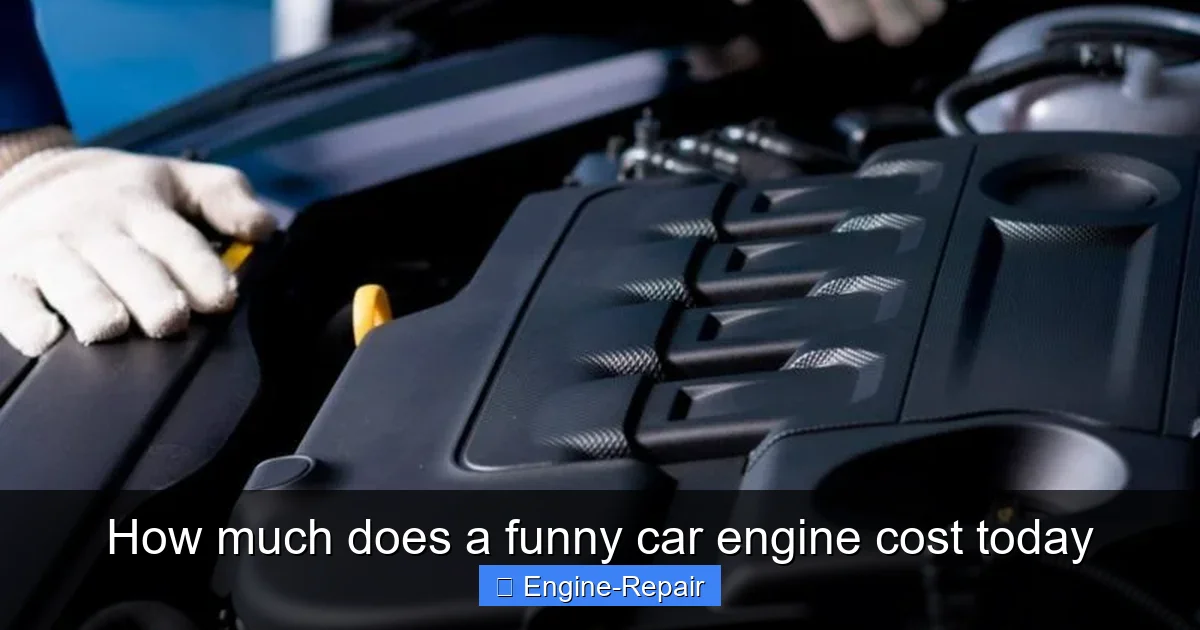
How much does a funny car engine cost today
A modern funny car engine typically costs between $50,000 and $100,000, with top-tier professional setups exceeding that range. This price reflects the extreme engineering, custom fabrication, and high-performance parts required to withstand 10,000+ horsepower and the brutal demands of drag racing. Beyond the initial purchase, teams must also budget for frequent rebuilds, maintenance, and replacement components, which can quickly rival the original engine cost.
How much does a funny car engine cost today
If you have ever watched a nitro Funny Car blast down the drag strip, you know it looks and sounds like money on fire. The ground shakes, the flames shoot out, and you can almost hear your wallet crying. So it is natural to wonder: how much does a funny car engine cost today?
The short answer is that a true nitro Funny Car engine is not cheap. We are not talking about a mild street build. We are talking about a 10,000+ horsepower monster that eats parts for breakfast. The engine cost is high, and the cost to run it is even higher.
In this post, I will walk you through what goes into the price of a funny car engine, from basic parts to full pro-level setups. I will also share some real world price ranges, what changes the price, and some tips if you are only looking to build a “funny car style” engine for a bracket car or nostalgia build. We will keep it simple and honest, so you can see where the money actually goes.
Key Takeaways
- Expect a wide price range: Complete funny car engines typically cost between $50,000 and $100,000.
- Factor in rebuild costs: Frequent teardowns and rebuilds can add tens of thousands per season.
- Used engines cut costs: Pre-owned or older-spec engines can be significantly cheaper than brand-new pro-level builds.
- Custom specs drive price: Higher horsepower, billet components, and exotic materials dramatically increase engine cost.
- Budget for supporting parts: Clutch, fuel system, ignition, and safety gear add major expenses beyond the engine.
- Work with reputable builders: Established race engine shops provide safer, more reliable power for the money.
- Plan long-term ownership: Consider maintenance, parts availability, and upgrade paths before committing to an engine.
Quick Answers to Common Questions
How much does a funny car engine cost today on average?
Today, a competitive funny car engine cost typically ranges from $50,000 to $100,000, depending on parts, tuning, and who builds it.
What affects how much a funny car engine cost ends up being?
The final funny car engine cost depends on brand, custom machining, blower and fuel setup, electronics, and whether you’re buying new, used, or fully custom-built.
Is the funny car engine cost different for beginners vs pros?
Yes, beginners might find a used or lower-spec setup for closer to $30,000–$50,000, while pro-level funny car engine cost can easily exceed $100,000 with top-tier components.
Does the funny car engine cost include maintenance and rebuilds?
No, the initial funny car engine cost usually covers just the build; regular tear-downs, replacement parts, and rebuilds can add tens of thousands more each season.
Can I lower how much a funny car engine cost by buying used parts?
You can cut the funny car engine cost by buying used or surplus parts, but you’ll trade savings for higher risk, more frequent rebuilds, and potentially lower performance.
📑 Table of Contents
What is a funny car engine, really?
Not your average V8
When people ask, “how much does a funny car engine cost?” they often think it is just a big V8 with a blower. In a way, that is true. But a modern nitro Funny Car engine is built very different from a street or mild race engine.
Most modern Funny Car engines are based on a 500 cubic inch, hemi style V8. They are usually modeled after the old Chrysler 426 Hemi, but almost every part is aftermarket and race only. You are not pulling this thing from a junkyard sedan.
- Solid billet aluminum block
- Massive cylinder heads with huge ports
- Giant roots style supercharger
- Nitromethane fuel system (with a little methanol)
- Dry sump oil system
- Custom ignition and data systems
All of this is built to survive about four seconds at full power. That is it. Then the team tears it down and checks or replaces parts. That is the world you step into when you ask about funny car engine cost.
Pro nitro vs “funny car style” engines
It also helps to split things into two groups:
- Pro nitro Funny Car engines – the kind you see in NHRA Camping World series. These are the most expensive and most extreme.
- Sportsman or nostalgia “funny car style” engines – still wild, but often run on alcohol, not nitro, and use less exotic parts.
When we talk about how much does a funny car engine cost today, you need to know which group you are in. A full pro nitro engine can cost more than a house. A smaller alcohol combo might be closer to a new pickup truck.
Typical cost ranges for funny car engines
Ballpark numbers you can expect
Let us get to the numbers, because that is what you came for. Below is a simple breakdown of common price ranges. These are rough, and they change with brand, spec, and who you know. But they help you see the big picture.
Visual guide about how much does a funny car engine cost
Image source: i.pinimg.com
| Engine Type | Power Level | Fuel Type | Approx. Cost (USD) | Notes |
|---|---|---|---|---|
| Entry “funny car style” big block | 800–1,200 hp | Gas / Pump race fuel | $15,000–$30,000 | Used block, mild blower or NA, bracket style build |
| Alcohol nostalgia funny car engine | 1,500–2,500 hp | Methanol | $35,000–$70,000 | Aftermarket block, blower, good rotating assembly |
| Modern blown alcohol funny car engine | 2,500–3,500+ hp | Methanol | $60,000–$100,000+ | High end block, heads, fuel and ignition systems |
| Top level nitro Funny Car engine (NHRA style) | 10,000+ hp | Nitromethane | $120,000–$200,000+ (complete) | Pro team spec, billet everything, top shelf parts |
So when someone asks, “how much does a funny car engine cost today?” a fair range is anywhere from around $15,000 for a basic used combo, up to $200,000 or more for a pro level nitro monster.
Why the range is so big
The range is wide because no two builds are the same. Prices change with:
- How much power you want
- How often you plan to run it
- How safe and reliable you want it to be
- Whether you buy used or new parts
- Who builds and tunes it
You can save money with used parts and lower power. But if you want to run near the front at a big race, you will spend more. That is true for almost every kind of racing, but funny car engines take it to an extreme.
Major parts that drive funny car engine cost
Block and rotating assembly
The heart of any funny car engine is the block and rotating assembly. This is where a lot of the cost lives.
- Billet aluminum block: $12,000–$25,000+
- Crankshaft (billet): $4,000–$8,000
- Connecting rods: $1,500–$3,000 per set
- Pistons: $1,000–$2,500 per set
- Bearings, pins, rings, hardware: $800–$1,500
In a nitro Funny Car, these parts see insane cylinder pressure and heat. Many teams treat rods and pistons as semi “disposable”. They swap them out after just a few runs. That affects not just the initial funny car engine cost, but the ongoing budget.
Heads, valvetrain, and cam
The top end is just as important as the bottom end, and just as pricey.
- Hemi cylinder heads (pair): $8,000–$20,000+ depending on brand and prep
- Valves, springs, retainers, locks: $1,500–$4,000
- Rocker assemblies: $3,000–$7,000
- Camshaft and lifters: $1,500–$4,000
High lift, high rpm, and crazy cylinder pressure means parts wear fast. Valve springs, for example, can need frequent replacement on nitro. So when you think about how much does a funny car engine cost today, remember it is not just the first build. It is the cost to keep it happy.
Supercharger and fuel system
The blower and fuel system are what give funny cars that brutal, violent power.
- Roots supercharger (14-71 or similar): $7,000–$18,000
- Injector hat and manifold: $3,000–$8,000
- Fuel pump (high flow): $3,000–$6,000
- Fuel lines, nozzles, valves: $1,500–$4,000
On nitro, the fuel system is even more extreme. The engine can burn gallons of fuel in a single pass. The parts must be precise and tough. That is why the funny car engine cost jumps so much as you move from alcohol to nitro.
Ignition, oiling, and support systems
There are also many “support” parts that add up fast:
- Magnetos and ignition system: $3,000–$8,000
- Dry sump oil pump and tank: $2,000–$5,000
- Oil pan, lines, filters, coolers: $1,000–$3,000
- Data logger and sensors: $2,000–$10,000 depending on how deep you go
Then there is the cost of assembly, machining, and tuning. If you are not doing the work yourself, a pro shop will charge for their time. That can add another $5,000–$15,000 or more to the total funny car engine cost.
Hidden costs: running and maintaining a funny car engine
The cost per pass
One thing that surprises people is how much each run costs. A top nitro Funny Car engine may only make one full pass before it is torn down. Even if the run is clean, the team will often inspect and replace parts as a safety rule.
Rough estimates for a nitro car per pass:
- Nitromethane fuel: $400–$600+ per run
- Wear parts (bearings, rings, gaskets, etc.): $300–$800 per run
- Periodic major parts (rods, pistons, valve springs): averaged out, can be $500–$1,500 per run
So even if the engine itself cost $150,000 to build, the ongoing funny car engine cost to run it can be thousands per weekend. That is why most of us enjoy these cars from the stands or on TV.
Maintenance for alcohol and “funny car style” builds
If you run an alcohol or bracket style funny car engine, the cost per pass is lower, but it is still not cheap.
- Oil changes after a few runs
- Checking bearings and valve springs often
- Replacing pistons and rods on a schedule if you push the tune
For a 1,500–2,000 hp alcohol setup, you might spend $200–$500 per weekend on basic wear items if you stay on top of things. That is still a lot, but it is far more realistic for smaller teams than full nitro.
Travel, safety gear, and crew
Even though this post is about how much does a funny car engine cost, it is worth noting that the engine is only part of the racing picture. You also have:
- Chassis and body
- Transmission and clutch
- Safety gear (belts, suit, helmet, fire system)
- Trailer, tow rig, and travel
- Spare parts and tools
Many racers say the engine is the “easy” cost to see. The hidden costs around it can be just as big, if not bigger, over time.
Ways to save money on a funny car style engine
Be honest about your goals
The best way to control funny car engine cost is to be clear about what you want to do. Ask yourself:
- Do I want a real nitro Funny Car, or just the look and sound?
- How fast do I really need to go?
- How often will I race?
- What can I afford to spend every month, not just at the start?
If you just want the vibe, you can build a blown alcohol big block in a funny car body. It will still be wild, but much cheaper and easier to live with than nitro.
Buy used parts from trusted racers
There is a strong used parts market in drag racing. Teams often sell last year’s engines, blowers, and fuel systems when they upgrade. You can cut your funny car engine cost a lot by buying used, if you know what to look for.
Tips for buying used:
- Ask for build sheets or history if possible
- Have a trusted engine builder inspect key parts
- Stay away from parts with unknown or “mystery” history
- Be ready to replace critical wear items right away
Used blocks, heads, and blowers can drop your initial cost by tens of thousands of dollars. Just do not assume “used” means “ready to race”.
Start with alcohol, not nitro
If you are new to this level of power, starting with methanol is usually smarter. Alcohol is:
- Less expensive than nitro
- Easier to tune
- More forgiving for beginners
You can still build a 1,500–2,000 hp alcohol funny car style engine for much less than a full nitro setup. That keeps your funny car engine cost and your learning curve under control.
Work with an experienced builder
It might feel cheaper to piece together an engine on your own. But if you are new to this, you can waste a lot of money on the wrong parts. An experienced builder who knows funny car engines can:
- Help pick parts that match your goals and budget
- Avoid combo mistakes that kill parts
- Set you up with a safe starting tune
Yes, you pay for their time. But you save money on broken parts and frustration. In the long run, that can lower your total funny car engine cost.
Is a funny car engine worth the cost?
What you really get for your money
So after all this, you might be asking if it is worth it. That depends on what you value. A real nitro Funny Car engine is not logical. It is not “cost effective” in any normal sense. It is about the rush, the noise, the fire, and the feeling when that car leaves the line.
For some racers, that feeling is worth every dollar. For others, a smaller, simpler combo is more fun because they can afford to run it more often and stress less about every pass.
Finding your level of crazy
If you are just dreaming, it is fun to know that a top nitro funny car engine can cost $150,000 or more. If you are serious about building something, it is smart to ask:
- Can I enjoy this hobby at a lower power level?
- Can I share costs with a partner or team?
- Would a nostalgia or alcohol car give me 90% of the fun for half the cost?
The goal is not just to own an engine. The goal is to run it, enjoy it, and not go broke or burn out in the process.
Final thoughts
To wrap it up, how much does a funny car engine cost today? For a true nitro pro level engine, plan on $120,000–$200,000+ for a complete, ready to run setup. For an alcohol or “funny car style” engine, you might be in the $15,000–$100,000 range, depending on power and parts.
The big thing to remember is that the first build is only part of the story. Fuel, maintenance, and upgrades all add up over time. If you go in with clear eyes and a real budget, you can find a level of funny car power that fits your life and still makes you grin every time you hit the throttle.
In the end, only you can decide what that feeling is worth. But now you have a clear picture of where the money goes, and what to expect when you start chasing that funny car dream.
Frequently Asked Questions
How much does a funny car engine cost today?
A competitive funny car engine today typically costs between $60,000 and $120,000, depending on the builder, components, and level of customization. Top-tier NHRA-level engines with premium parts and tuning support can push the price even higher.
What factors affect how much a funny car engine costs?
The cost is driven by horsepower goals, brand of parts (crank, rods, pistons, heads), fuel system, and whether it’s a new build or a refreshed engine. Labor, dyno time, and ongoing tuning support also add significantly to the final price.
Is it cheaper to buy a used funny car engine instead of a new one?
Yes, used funny car engines can be much cheaper, often ranging from $25,000 to $60,000 depending on condition and history. However, buyers must factor in potential rebuild costs and the risk of hidden damage from previous runs.
How much does it cost to maintain a funny car engine each season?
Seasonal maintenance on a competitive funny car engine can easily run into tens of thousands of dollars. Regular teardowns, replacement of rods, pistons, bearings, and valve train parts are necessary to keep the engine reliable at extreme power levels.
Can I build a budget funny car engine, and what would it cost?
A “budget” funny car-style engine for lower-level or exhibition racing might be built in the $25,000 to $50,000 range. It will typically make less power and use more off-the-shelf components, but it can still deliver the look and sound of a funny car without full pro-level costs.
Why are funny car engines so expensive compared to regular racing engines?
Funny car engines are designed to handle massive horsepower, extreme cylinder pressures, and very short but violent runs, which demands ultra-strong, specialized components. The precision machining, custom parts, and constant rebuild cycles all contribute to their high cost.