F-150 vs F-250: Uncover Your True Cost of Ownership
📋 Table of Contents
- 🎯 Key Takeaways
- Initial Purchase Price and Financing Considerations
- Fuel Economy, Maintenance, and Repair Cost Comparisons
- Insurance Premiums, Registration, and Depreciation Factors
- Long-Term Value and Choosing the Right Truck for Your Needs
- Your Truck, Your Budget: Making the Right Decision
- 💬 Quick Questions & Answers
- ❓ Frequently Asked Questions
Understanding the true cost of ownership for an F-150 versus an F-250 reveals that the F-250 typically incurs higher expenses across various categories. While initial purchase price is a factor, fuel, maintenance, insurance, and depreciation play significant roles in the long-term financial commitment. Savvy buyers will consider all these elements to make the best decision for their budget and needs.
🎯 Key Takeaways
- F-250 generally costs more in fuel and heavy-duty maintenance.
- Insurance premiums are often higher for the F-250 model.
- Consider resale value differences for overall long-term savings.
- Your specific usage significantly impacts operating and repair costs.
- Factor in financing, taxes, and potential unforeseen major repairs.
Dreaming of that powerful Ford truck for work or adventure? You are not alone. Many drivers face a big decision: the versatile Ford F-150 or the heavy-duty F-250 Super Duty. Both are incredible trucks, but their true cost goes far beyond the sticker price you see at the dealership.
Understanding the full cost of ownership is crucial. This is about more than just monthly payments. We will dive deep into initial costs, how much you spend on fuel, and even maintenance bills. Our goal is to help you pick the right truck for your budget and your life. Let’s uncover the real numbers together.
Initial Purchase Price and Financing Considerations
Sticker Price vs. Your Real Out-of-Pocket Expense
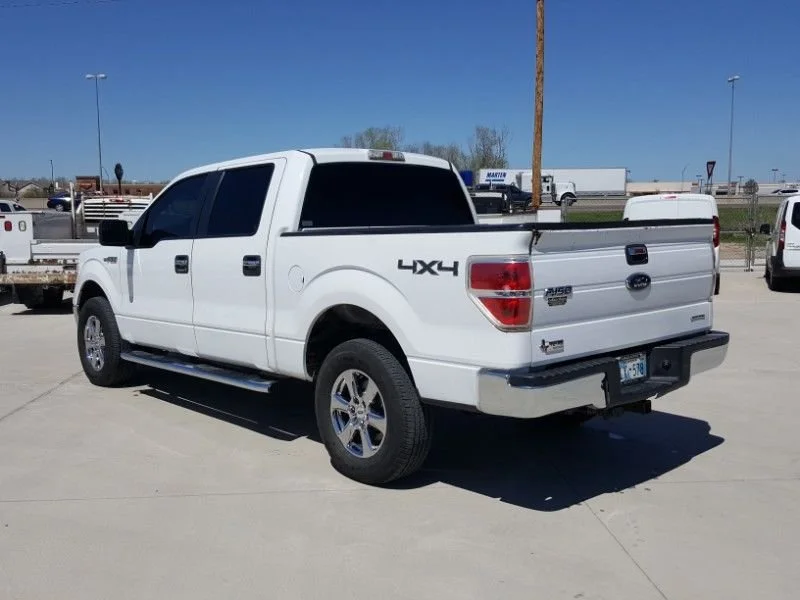
The first number you usually see is the manufacturer’s suggested retail price, or MSRP. Generally, an F-250 will have a higher starting MSRP than an F-150. However, this is not always a straightforward comparison. A fully loaded F-150 Platinum can easily cost more than a base model F-250 XL. For instance, a new F-150 XLT might start around $45,000. A basic F-250 XL could begin at $50,000. But an F-150 Limited can soar past $75,000, and a well-equipped F-250 Lariat can hit similar figures. It really depends on the trim level and options you choose. Don’t just compare base models; configure the specific truck you want for an accurate price comparison.
The Impact of Financing and Insurance
A higher purchase price directly translates to higher loan payments. Even a $5,000 difference in price can mean an extra $80-100 on your monthly bill over a 60-month loan term, depending on your interest rate. Over time, those extra payments add up significantly. Furthermore, your insurance costs are often tied to the vehicle’s value, repair costs, and its potential for causing damage. F-250s, being heavier and more powerful, can sometimes be more expensive to insure than their F-150 counterparts. It is always wise to get insurance quotes for both models before you finalize a purchase. This step can save you unexpected expenses down the road.
- Compare Loan Offers: Always seek quotes from multiple banks and credit unions.
- Get Insurance Estimates: Contact your insurance provider early for accurate quotes on both trucks.
- Factor in Taxes and Fees: Remember that sales tax and registration fees are based on the truck’s purchase price.
Fuel Economy, Maintenance, and Repair Cost Comparisons
Fuel Economy: The Daily Drain on Your Wallet
When it comes to fuel, the F-250 typically consumes more. It is a heavier truck, designed for serious work, and often comes with larger, more powerful engines. A Ford F-150 with an EcoBoost engine might achieve 18-20 miles per gallon combined. In contrast, an F-250 with a gas V8 engine could get 13-15 MPG. While a Power Stroke diesel F-250 might hit 15-18 MPG, diesel fuel generally costs more per gallon. Let’s consider an example: If you drive 15,000 miles a year, an F-150 at 20 MPG uses 750 gallons. An F-250 at 14 MPG uses 1071 gallons. At $3.50 a gallon, that’s an annual cost of $2,625 for the F-150 versus $3,748 for the F-250. This difference of over $1,100 per year can quickly add up over the years you own the truck. Do not underestimate this ongoing expense.
Routine Maintenance and Unexpected Repairs
Maintenance costs for an F-250 can also be higher. The F-250 uses larger, heavy-duty components designed for tougher tasks. This means bigger tires, more oil for larger engines, and potentially more expensive parts. For instance, an oil change on an F-250 with a Power Stroke diesel engine is significantly more complex and costly than on an F-150 gas engine. Brakes, tires, and other wear items will likely be more expensive on the F-250 due to their size and the truck’s higher load capacity. While both trucks are built tough, if something unexpected breaks, repair costs for specific F-250 parts, especially for the complex diesel engine, can be higher. Always research common issues for the specific model years you are considering to prepare for potential future expenses.
- Tire Costs: F-250 tires are larger and often pricier to replace.
- Fluid Capacities: Expect to pay more for oil changes and other fluid services due to larger capacities.
- Specialized Labor: Some F-250 repairs, especially diesel, may require specialized tools or labor.
Insurance Premiums, Registration, and Depreciation Factors
Beyond the pump and the repair shop, other significant costs quietly add up. Your truck’s insurance premiums, annual registration fees, and its long-term depreciation rate play a crucial role in its overall cost of ownership. These aren’t just one-off expenses; they are recurring financial considerations that can tilt the balance between an F-150 and an F-250.
Understanding Insurance Differences
When it comes to insurance, the heavier and more expensive vehicle often translates to higher premiums. An F-250, being a larger, more powerful, and typically higher-value truck, often commands higher insurance rates than an F-150. Insurers assess risk based on factors like vehicle weight, engine size, repair costs, and potential damage in an accident.
- Weight and Power: The F-250’s increased mass and available heavy-duty engines can lead to higher perceived risk and repair costs.
- Usage: If you declare commercial use for your F-250, this could further impact your premium compared to a personal-use F-150.
- Coverage Levels: Both trucks require robust coverage, but the F-250’s higher initial value often means higher comprehensive and collision coverage costs.
Practical Tip: Always get insurance quotes for both models from multiple providers before making your final decision. The difference can be hundreds of dollars annually.
Registration Fees and Depreciation Trends
Registration fees vary by state, but they are often tied to a vehicle’s purchase price, weight, or age. Since the F-250 is typically heavier and more expensive than an F-150, its registration fees are often higher. This is another recurring cost to factor into your annual budget.
Regarding depreciation, both Ford trucks generally hold their value well, a testament to their reliability and popularity. However, there are nuances:
- Initial Drop: Like all new vehicles, both experience a significant value drop in the first few years.
- F-250’s Edge: Heavy-duty trucks like the F-250 often demonstrate strong resale value retention, especially if well-maintained and equipped with desirable features (like a diesel engine). Their utility for commercial and serious towing applications ensures consistent demand in the used market.
- F-150’s Broad Appeal: The F-150’s immense popularity also ensures a healthy used market, though its depreciation might be slightly higher percentage-wise over time due to the sheer volume sold.
While an F-250 might cost more upfront and incur higher initial fees, its stronger depreciation performance can sometimes offset some of those costs over the long run, offering better value retention than you might expect.
Long-Term Value and Choosing the Right Truck for Your Needs
Understanding the immediate costs is crucial, but true financial wisdom comes from looking at the bigger picture: the long-term value. This includes how much your truck will be worth when you’re ready to sell it, and ultimately, whether the truck you choose truly aligns with your specific needs and avoids unnecessary expenditure.
Resale Value and Total Cost of Ownership
When considering the total cost of ownership (TCO), resale value is a powerful factor. A truck that holds its value well effectively lowers your true cost of ownership because you recover a larger portion of your initial investment when you sell it. This is where the F-250 can sometimes shine.
- F-250’s Strong Retention: Due to its specialized capabilities and often more robust build, the F-250 can maintain a higher percentage of its value, particularly for specific configurations like diesel models. This is especially true in regions where heavy-duty work is common.
- F-150’s Consistent Demand: The F-150’s versatility ensures broad market appeal, making it easy to sell. While it might not retain value at the same percentage as some F-250s, its lower initial cost means the absolute dollar amount lost to depreciation can sometimes be less.
Always consider the trade-off: a higher initial purchase price and higher operating costs for the F-250 might be partially recouped by superior resale value, but only if you actually need its capabilities.
Making the Smart Choice
Ultimately, the “cheaper” truck isn’t just about the sticker price or even the lowest TCO number. It’s about the truck that best meets your requirements without overspending on features you don’t need. Here’s how to simplify your decision:
- Assess Your Real Needs:
- What’s the heaviest trailer you’ll tow regularly?
- How often will you tow or haul?
- Is this truck primarily for work, recreation, or daily commuting?
- Crunch the Numbers (Honestly): Get quotes for insurance, estimate fuel costs based on your driving, and research typical maintenance schedules for both.
- Consider Future-Proofing: If your towing needs might grow slightly in the future, a higher-capacity F-150 (like a Max Trailer Tow package) might suffice without jumping to an F-250.
- Test Drive Both: Experience the ride, handling, and daily usability. The F-250’s stiffer suspension might not be ideal for unladen daily driving.
Don’t let the desire for “more truck” lead you to an F-250 if an F-150 truly fits your bill. The savings in fuel, insurance, and possibly maintenance could be substantial.
Your Truck, Your Budget: Making the Right Decision
Choosing between an F-150 and an F-250 is a complex decision that extends far beyond the dealership lot. We’ve explored how fuel economy, maintenance, insurance premiums, and even depreciation all play significant roles in the true cost of ownership. The F-150 often presents a more economical daily driver with lower operating costs, while the F-250, despite higher expenses, offers unmatched capability and potentially strong resale value for those who genuinely need it.
Before you commit, take these final steps: first, precisely define your primary towing and hauling requirements. Second, obtain specific insurance quotes for your location and desired models. By aligning your truck’s capabilities with your actual needs, you can drive away confident that you’ve made the smartest, most cost-effective choice for your wallet and your lifestyle.
💬 Quick Questions & Answers
Is the F-250 always more expensive to own than an F-150?
Generally, yes, the F-250 has higher overall ownership costs due to increased fuel consumption, more expensive parts, and higher insurance premiums.
Which truck has better fuel economy?
The F-150, especially with smaller engine options, typically offers significantly better fuel economy than the heavier, more powerful F-250.
Are F-250 repairs more expensive?
Yes, parts for heavy-duty trucks like the F-250 are often more expensive, and specialized labor can increase repair costs.
Does the F-250 depreciate faster?
The F-250’s higher initial cost usually means a larger absolute depreciation amount over time, though percentage-wise they can be similar.
How does towing affect ownership costs?
Frequent heavy towing increases fuel consumption, accelerates wear on components, and can lead to higher maintenance for both trucks.
❓ Frequently Asked Questions
What are the primary factors contributing to the F-250’s higher cost of ownership compared to the F-150?
The F-250’s higher cost primarily stems from its larger engines, leading to lower fuel economy, more expensive heavy-duty components for maintenance and repairs, and often higher insurance premiums due to its greater value and capacity. Its initial purchase price is also generally higher than a comparable F-150.
How significant is the difference in fuel costs between the two models?
The difference in fuel costs can be substantial, especially for higher mileage drivers. An F-150 might average 18-22 MPG, while an F-250, particularly with a diesel engine, might average 13-17 MPG, resulting in hundreds or thousands of dollars more in annual fuel expenses.
What impact does insurance have on the long-term cost of ownership for each truck?
Insurance costs are often higher for the F-250 because its higher purchase price, greater repair costs, and classification as a heavy-duty vehicle can lead to increased premiums. Factors like driver history, location, and coverage levels will also significantly influence these rates for both models.
Are there any scenarios where an F-250 might be a more cost-effective choice in the long run?
While rare for typical use, an F-250 could be more cost-effective if you consistently need its heavy-duty towing and hauling capabilities. Overloading an F-150 regularly can lead to accelerated wear, costly repairs, and potential safety issues, making the F-250 a more durable and safer investment in those specific, demanding situations.
How do resale values compare for the F-150 and F-250?
Both the F-150 and F-250 generally hold their value well, but their depreciation curves can differ. The F-250, despite its higher initial price, can sometimes retain a strong percentage of its value due to demand for heavy-duty trucks, especially diesel models, but its higher starting cost means the absolute dollar depreciation is usually greater.
What less obvious costs should potential buyers consider for either truck?
Beyond fuel, maintenance, and insurance, buyers should consider higher registration fees for heavier vehicles, potential parking difficulties in urban areas, and the cost of specialized tires for the F-250. Also, factor in the cost of financing and any potential modifications or upgrades unique to each truck’s intended use.