Honda Civic radiator replacement cost guide 2025
Honda Civic radiator replacement typically costs between $500 and $1,100 in 2025, depending on your model year, labor rates, and whether you choose OEM or aftermarket parts. This guide breaks down parts and labor pricing, symptoms of a failing radiator, and money‑saving tips so you know exactly what to expect before heading to the shop. Use it to compare quotes, avoid unnecessary upsells, and keep your Civic running cool without overspending.
Honda Civic radiator replacement cost guide 2025
If your Honda Civic is starting to run hot, or you see a little green puddle under the front bumper, it can make your stomach drop. A bad radiator feels like a big, scary repair. And the first thing most of us think is: “How much is this going to cost me?”
The good news: a Honda Civic radiator replacement is usually cheaper than on many larger cars and SUVs. The bad news: it’s still not pocket change, and the price can vary a lot based on where you live, your Civic’s model year, and the parts you choose.
In this 2025 guide, we’ll walk through real-world Honda Civic radiator replacement cost ranges, what affects the price, how to save money, and when it’s safe to DIY versus when to let a pro handle it. Think of this as advice from a friend who’s been through the same repair and wants you to go in prepared, not stressed.
Key Takeaways
- Expect total costs between $600–$1,200 for Honda Civic radiator replacement in 2025, parts and labor included.
- Confirm if your Civic’s year and engine require OEM or aftermarket radiators before approving any quote.
- Always request a detailed estimate separating radiator, coolant, hoses, and labor to spot hidden markups.
- Compare dealer vs. independent shop pricing since labor rates can double overall radiator replacement cost.
- Ask shops about warranty coverage on both radiator parts and labor to protect against premature failures.
- Inspect for related issues like leaking hoses, damaged fans, or thermostat problems during the radiator replacement visit.
- Don’t delay replacement if overheating; driving with a failing radiator can cause catastrophic engine damage and higher bills.
Quick Answers to Common Questions
How much does a Honda Civic radiator replacement cost in 2025?
In 2025, the average Honda Civic radiator replacement cost typically ranges from $650 to $1,100, depending on your model year and local labor rates.
What affects the Honda Civic radiator replacement cost the most?
The biggest factors in Honda Civic radiator replacement cost are whether you use OEM or aftermarket parts, your local shop’s labor rate, and if additional components like hoses or coolant need replacing.
Is it cheaper to replace a Honda Civic radiator at a dealership or an independent shop?
Dealerships usually charge more for Honda Civic radiator replacement cost due to higher labor rates, while a reputable independent shop can often do the job for several hundred dollars less.
Can I lower my Honda Civic radiator replacement cost by using aftermarket parts?
Yes, using quality aftermarket parts can reduce your Honda Civic radiator replacement cost, but make sure they’re from a trusted brand and come with a solid warranty.
Is it safe to drive with a failing radiator to avoid the Honda Civic radiator replacement cost?
No, driving with a bad radiator can overheat your engine and cause far more expensive damage than the Honda Civic radiator replacement cost itself.
📑 Table of Contents
- Average Honda Civic radiator replacement cost in 2025
- What affects Honda Civic radiator replacement cost?
- Signs your Honda Civic radiator needs replacement
- DIY vs professional Honda Civic radiator replacement
- How to save money on Honda Civic radiator replacement
- Preventing future radiator problems
- Conclusion: planning your Honda Civic radiator replacement in 2025
Average Honda Civic radiator replacement cost in 2025
Typical price range you can expect
For most Honda Civic models, the average radiator replacement cost in 2025 falls in this range:
- Parts only: $150 – $480
- Labor only: $220 – $450
- Total Honda Civic radiator replacement cost: $370 – $930
That’s a wide range, so let’s narrow it down a bit by model age and type of part.
Cost by model year and part type
Older Civics tend to be cheaper to repair because the parts are simpler and more common. Newer models, especially turbo or performance trims, can push the higher end of the price range.
| Honda Civic generation / year | Typical parts cost (radiator only) | Typical labor cost | Estimated total (parts + labor) |
|---|---|---|---|
| 2001–2005 Civic | $150 – $260 | $220 – $320 | $370 – $580 |
| 2006–2011 Civic | $170 – $300 | $230 – $350 | $400 – $650 |
| 2012–2015 Civic | $190 – $340 | $240 – $380 | $430 – $720 |
| 2016–2021 Civic (incl. turbo) | $220 – $420 | $260 – $420 | $480 – $840 |
| 2022–2025 Civic | $260 – $480 | $280 – $450 | $540 – $930 |
These numbers are 2025-style ballparks for a standard radiator replacement. They don’t include extras like a new thermostat, hoses, or coolant if those are added on.
What’s usually included in the price
A typical Honda Civic radiator replacement quote will usually cover:
- New radiator (OEM or aftermarket)
- Coolant drain and refill
- Labor to remove and install the radiator
- Bleeding the cooling system to remove air
Some shops will also include new radiator hoses or clamps in their estimate. Others will quote them as optional but “strongly recommended.” Always ask what’s included so you can compare prices fairly.
What affects Honda Civic radiator replacement cost?
1. OEM vs aftermarket radiator
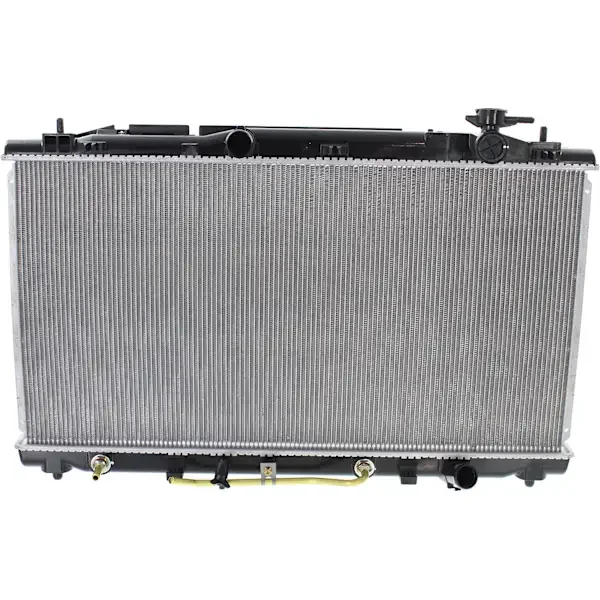
This is one of the biggest cost drivers. You’ll often see two main options:
Visual guide about honda civic radiator replacement cost
Image source: upload.wikimedia.org
- OEM (Original Equipment Manufacturer): The same brand Honda uses from the factory. Usually more expensive.
- Aftermarket: Made by third-party brands. Often cheaper, with a wide range of quality.
For a Honda Civic radiator replacement, OEM radiators often run $280–$480, while decent aftermarket radiators can be $150–$300. If you plan to keep the car for many years, OEM can be a safe bet. If you’re trying to keep costs down on an older Civic, a good aftermarket brand can be perfectly fine.
2. Labor rates and shop type
Labor rates can change the total Honda Civic radiator replacement cost more than you’d think.
- Dealer service departments: Highest hourly rates, often $150–$220 per hour in 2025.
- Independent shops: Usually $90–$160 per hour.
- Specialty / performance shops: Can be similar to or higher than dealer rates for turbo or Si models.
On many Civics, a radiator replacement takes about 2–3 hours. So a shop at $100/hour vs $180/hour can change your total by $160 or more.
3. Your location
Where you live matters. Big city shops with high rent and wages will charge more than small-town garages. For example:
- Large metro areas (Los Angeles, New York, Seattle): often at the high end of the range.
- Smaller towns or rural areas: often closer to the low or mid range.
It’s the same Honda Civic radiator replacement, but local costs push the final bill up or down.
4. Extra parts that need replacing
A radiator rarely fails in total isolation. Once a mechanic is in there, they may find other worn parts. Common add-ons include:
- Upper and lower radiator hoses: $30–$90 for parts
- Thermostat: $40–$120 for parts
- Coolant temperature sensor: $40–$100
- Fresh coolant: $25–$80, depending on type and amount
This can bump a $500 Honda Civic radiator replacement up to $650 or more. Sometimes it’s worth doing while everything is apart to avoid another repair later. Just make sure the shop explains why each part is needed.
5. Type of Civic and engine
Not all Civics are equal when it comes to radiator work. Costs can be higher for:
- Turbo models (1.5T, etc.): More complex cooling setups.
- Si or performance trims: Sometimes use different, pricier radiators.
- Hybrids: Can have additional cooling components and tighter engine bays.
Base models with the standard non-turbo engine usually sit at the lower end of the Honda Civic radiator replacement cost range.
Signs your Honda Civic radiator needs replacement
Common warning signs
Most of us don’t think about the radiator until something feels off. Here are some signs you might be heading toward a Honda Civic radiator replacement:
- Engine temperature gauge creeping up: Especially in traffic or on hot days.
- Coolant leaks: Green, blue, or pink fluid under the front of the car.
- Sweet smell from the engine bay: Coolant has a sweet, syrup-like smell.
- Low coolant level: You keep topping it up, but it keeps dropping.
- Visible cracks or corrosion: On the radiator’s plastic tanks or metal fins.
If you see any of these, don’t ignore them. Overheating can damage the head gasket or even the engine, which is far more expensive than a radiator.
When repair is possible vs full replacement
Sometimes the issue isn’t the radiator core itself. It might be:
- A loose or cracked hose
- A bad radiator cap
- A leaking clamp
- A thermostat stuck closed
These are cheaper fixes. A mechanic can pressure-test the cooling system to find the real culprit. But if the radiator’s plastic tanks are cracked, or the core is heavily corroded, a full Honda Civic radiator replacement is usually the only long-term solution.
Realistic example
Imagine you drive a 2013 Civic with 140,000 miles. One day you notice the temp gauge climbing in traffic and a small puddle in the driveway. The shop finds a crack in the upper radiator tank. They quote:
- Aftermarket radiator: $230
- Coolant: $35
- Labor (2.5 hours @ $120/hr): $300
- Total: $565 plus tax
They also suggest new hoses for another $90 in parts. You could say no and risk them failing later, or say yes and pay a bit more now to avoid another cooling system job soon.
DIY vs professional Honda Civic radiator replacement
Is DIY radiator replacement realistic?
If you’re handy with tools and have some patience, a DIY Honda Civic radiator replacement can be doable, especially on older models. But it’s not for everyone.
DIY costs might look like this:
- Radiator: $150–$300
- Coolant: $25–$60
- New hoses (optional but smart): $40–$90
- Total DIY cost: roughly $215–$450
You save the labor cost but invest your own time. Expect 3–5 hours if it’s your first time, depending on the model and how rusty things are.
Challenges of DIY on a Honda Civic
Some things to think about before you grab the wrenches:
- Coolant disposal: You can’t just pour it down the drain. It’s toxic and needs proper disposal.
- Bleeding the system: Air pockets in the cooling system can cause overheating. You need to follow the proper bleed procedure.
- Access: On some newer Civics, getting to the radiator can be tight and may involve removing covers or the front bumper.
If any of that sounds stressful, it might be worth paying for professional labor and peace of mind.
When a professional shop is the better call
Let a shop handle your Honda Civic radiator replacement if:
- You’re not comfortable working with fluids and engine components.
- You don’t have a safe place to work on the car.
- You rely on the car daily and need a quick, guaranteed fix.
- Your Civic is still under warranty or extended coverage.
A shop will usually back their work with a warranty on both parts and labor, which can be a big stress reliever.
How to save money on Honda Civic radiator replacement
Compare multiple quotes
Don’t stop at the first price you hear. For the same Honda Civic radiator replacement job, you might see:
- Dealer quote: $820
- Independent shop A: $640
- Independent shop B: $520
Ask each shop:
- Are you using OEM or aftermarket parts?
- What’s included in the price (coolant, hoses, clamps)?
- How long is the warranty on parts and labor?
That way you’re comparing apples to apples, not just the total number.
Choose the right radiator type for your situation
Think about how long you plan to keep the car:
- Keeping the Civic 5+ more years: OEM or a high-quality aftermarket brand is worth it.
- Planning to sell in 1–2 years: A reliable mid-range aftermarket radiator can be a smart way to lower your Honda Civic radiator replacement cost.
Don’t always go for the absolute cheapest part. A bargain radiator that fails early means paying labor twice.
Bundle other cooling system work
If your Civic has higher miles, it can be cheaper long-term to bundle related jobs:
- Radiator + hoses + thermostat
- Radiator + water pump (if due soon)
- Radiator + coolant flush
You pay labor once, instead of multiple times as each part fails. Ask the shop, “Is there anything else you’d recommend doing while the system is open, and why?”
Check for coverage and discounts
Before you pay out of pocket, check:
- Extended warranty or service contract: Some cover cooling system parts.
- Roadside assistance memberships: May offer discounts at partner shops.
- Coupons or promotions: Many shops run seasonal deals on cooling system services.
Even a 10–15% discount can shave a nice chunk off your Honda Civic radiator replacement cost.
Preventing future radiator problems
Stay on top of coolant changes
Coolant doesn’t last forever. Old coolant can become acidic and start eating away at internal parts, including your radiator.
General tips (always check your owner’s manual):
- First coolant change often around 100,000 km / 60,000 miles or a set number of years.
- After that, changes are usually more frequent.
Regular coolant changes help prevent corrosion and can extend the life of your radiator and water pump.
Watch for small leaks early
Get in the habit of:
- Glancing at the ground where you park.
- Checking the coolant reservoir level every month or two.
- Noticing any sweet smell after driving.
Catching a small leak early can mean a quick hose or clamp fix instead of a full Honda Civic radiator replacement.
Keep the front of the radiator clean
Over time, leaves, bugs, and road grime can clog the fins on the front of the radiator and reduce airflow.
- Use low-pressure water (not a harsh pressure washer) to gently rinse the front.
- Be careful not to bend the thin metal fins.
Good airflow helps your Civic run cooler, especially in summer or stop-and-go traffic.
Drive gently when the engine is hot
If you ever see the temperature gauge climbing:
- Turn off the A/C.
- Turn the heater on full hot to help pull heat from the engine.
- Pull over safely and shut the engine off if it keeps rising.
This won’t fix a bad radiator, but it can help protect your engine until you can get it checked. Avoiding severe overheating can be the difference between a manageable Honda Civic radiator replacement cost and a huge engine repair bill.
Conclusion: planning your Honda Civic radiator replacement in 2025
A failing radiator is stressful, but it doesn’t have to catch you completely off guard. In 2025, most drivers will see a Honda Civic radiator replacement cost between $370 and $930, depending on model year, parts choice, and labor rates.
By understanding what affects the price, asking clear questions, and comparing a couple of quotes, you can choose the option that fits your budget and your plans for the car. Whether you go with an OEM radiator at a dealer or a solid aftermarket part at a trusted independent shop, the goal is the same: a Civic that runs cool, stays reliable, and doesn’t surprise you with bigger problems down the road.
Take a breath, gather a few estimates, and use this guide as your cheat sheet. With a bit of planning, your Honda Civic radiator replacement can be a one-time fix that keeps you driving worry-free for years to come.
Frequently Asked Questions
How much does a Honda Civic radiator replacement cost in 2025?
In 2025, the average Honda Civic radiator replacement cost typically ranges from $650 to $1,100 at most repair shops. The final price depends on your Civic’s model year, labor rates in your area, and whether you choose an OEM or aftermarket radiator.
What factors affect Honda Civic radiator replacement cost?
The main factors are the model year, type of radiator (OEM vs. aftermarket), local labor rates, and any additional parts needed like hoses, clamps, or coolant. If corrosion or overheating has damaged related components, your total bill can increase significantly.
Is it worth replacing a radiator on an older Honda Civic?
It’s usually worth replacing the radiator if the car is otherwise mechanically sound and the repair cost is less than the vehicle’s value. For very high-mileage or rusted Civics, you may want to compare the radiator replacement cost with the price of upgrading to a newer vehicle.
Can I drive my Honda Civic with a bad radiator?
Driving with a bad or leaking radiator is risky and can quickly lead to engine overheating and serious engine damage. If you suspect radiator failure, it’s best to park the car and arrange a tow to avoid turning a moderate repair into a very expensive engine rebuild.
How long does a Honda Civic radiator replacement take?
Most shops can complete a Honda Civic radiator replacement in about 2 to 4 hours. The exact time depends on the generation of your Civic and whether any seized bolts, rust, or additional cooling system issues are discovered during the job.
Can I reduce my Honda Civic radiator replacement cost?
You can often lower costs by using a high-quality aftermarket radiator and comparing quotes from several independent shops instead of going straight to the dealership. Performing simple add-ons yourself—like refilling coolant after the job or replacing the radiator cap—can also trim the overall bill slightly.