Mini Cooper Turbo Replacement Cost What To Expect
Replacing a Mini Cooper turbo can be a significant investment, typically ranging from $1,500 to $3,500 or more, heavily dependent on parts and labor. This comprehensive cost covers diagnostic fees, the new turbocharger, and associated components like oil lines and gaskets. Expect a professional repair that restores your Mini’s performance and efficiency, ensuring it runs optimally.
Life with a Mini Cooper is a special kind of joy, isn’t it? You love its nimble handling, iconic design, and that thrilling burst of acceleration that makes every drive an adventure. It’s more than just a car; it’s a personality on wheels. But then, one day, you notice something’s off. A strange noise, a puff of smoke, or perhaps that dreaded check engine light decides to make an unwelcome appearance. Your heart sinks a little, doesn’t it? Especially when you suspect the problem might be with the turbocharger.
We’ve all been there, facing a repair bill that feels like it could buy a small island. When it comes to a Mini Cooper, especially models like the S and JCW, the turbocharger is a key component for that signature spirited performance. Unfortunately, like any complex mechanical part, it can wear out or develop issues over time. If you’ve landed here, chances are you’re bracing yourself for the potential cost, and you’re looking for clear, honest answers about the Mini Cooper turbo replacement cost. You want to know what to expect, what influences the price, and how to navigate this potentially expensive repair without feeling completely overwhelmed.
Consider this your friendly guide through the world of turbo replacements. We’re going to break down everything you need to know about the Mini Cooper turbo replacement cost. We’ll explore why these repairs can be pricey, what factors play a role in the final bill, and offer practical tips to help you manage the expense. Our goal is to empower you with information, so you can make the best decision for your beloved Mini and your wallet.
Key Takeaways
- Expect wide costs: Turbo replacement ranges from $1,500 to $3,500+.
- Parts vary greatly: OEM turbos cost more than quality aftermarket or rebuilt units.
- Labor drives cost: Professional installation accounts for a significant portion.
- Get multiple quotes: Compare prices from independent shops and dealerships.
- Consider rebuilds: Rebuilt turbos offer a cost-effective alternative to new.
- Preventative care saves: Regular oil changes extend turbo life, reducing future costs.
- Early detection is key: Address turbo issues promptly to prevent further damage.
Quick Answers to Common Questions
What’s the typical Mini Cooper turbo replacement cost?
Generally, you can expect the mini cooper turbo replacement cost to range from $1,500 to $3,500, varying based on your specific model, year, and location. This usually covers both the turbocharger part and the associated labor.
What factors really influence the final price?
The biggest factors impacting your mini cooper turbo replacement cost are whether you choose an OEM or aftermarket turbo, the labor rates at your chosen shop, and if any additional components (like oil lines or gaskets) also need replacing. Some Mini models are also more complex, increasing labor time.
Can I save money by attempting a DIY turbo replacement?
While technically possible for highly experienced mechanics, a DIY mini cooper turbo replacement is extremely complex and not recommended for most car owners. Improper installation can lead to severe engine damage, ultimately increasing your overall cost.
Should I consider an aftermarket turbo to lower the cost?
Absolutely, aftermarket turbos can often reduce your mini cooper turbo replacement cost significantly compared to genuine OEM parts. Just be sure to choose a reputable brand with positive reviews to ensure quality and reliability for your Mini.
Is it worth investing in a turbo replacement for an older Mini?
For many Mini owners, investing in a mini cooper turbo replacement is a cost-effective way to extend their beloved car’s life and restore its spirited performance, especially if the rest of the vehicle is in good condition. It’s often a much more affordable option than buying a new car!
📑 Table of Contents
- Understanding Your Mini’s Turbocharger: Why It’s So Important
- The Factors Influencing Mini Cooper Turbo Replacement Cost
- Breaking Down the Mini Cooper Turbo Replacement Cost Components
- A Realistic Look at Mini Cooper Turbo Replacement Cost Ranges
- Tips for Managing Your Mini Cooper Turbo Replacement Cost
- Beyond the Repair: What Else to Consider
Understanding Your Mini’s Turbocharger: Why It’s So Important
Before we dive into the numbers, let’s take a quick moment to understand what a turbocharger actually does. It’s a marvel of engineering, truly. For Mini Cooper S and JCW models, the turbo is what gives your car that extra oomph, that feeling of being shot out of a cannon when you press the accelerator. Without it, your Mini would feel sluggish, underpowered, and frankly, a lot less fun. Knowing what it does helps you appreciate its value and why fixing it is so crucial.
What Does a Turbo Do?
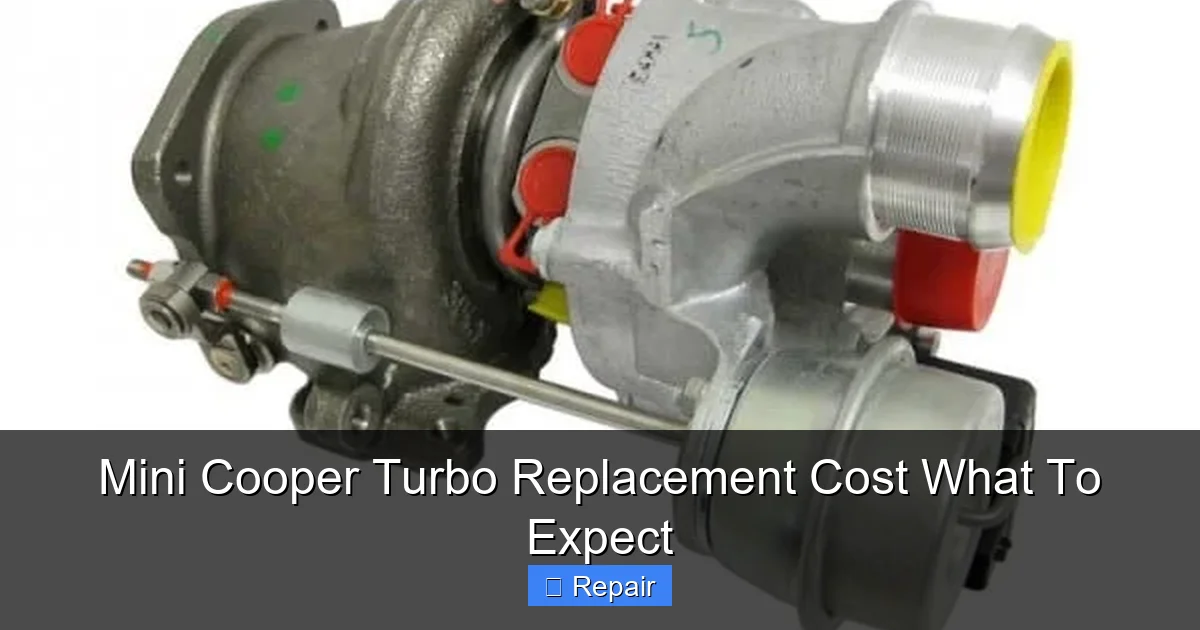
In simple terms, a turbocharger uses exhaust gases, which would otherwise be wasted, to spin a turbine. This turbine, in turn, spins a compressor, which forces more air into your engine’s cylinders. More air means more oxygen, and more oxygen allows for more fuel to be burned efficiently. The result? A significant boost in power and better fuel economy than a naturally aspirated engine of the same size. It’s how Mini gets so much zip out of a relatively small engine.
Common Mini Cooper Turbo Issues
Mini Coopers, particularly those equipped with the N14 engine (found in 2007-2010 Cooper S models and early JCWs), are well-known for certain turbo-related problems. The N18 engine (2011-2013 Cooper S and later JCWs) generally improved on these, but can still face issues. Some common culprits include:
- Wastegate Rattle: This is a very common issue, often heard as a rattling sound from the engine bay, especially on deceleration. It’s due to wear in the wastegate actuator linkage.
- Oil Leaks: The turbocharger operates at extremely high temperatures, and its oil supply lines can degrade over time, leading to leaks. Low oil levels can quickly damage the turbo.
- Bearing Failure: The turbo’s bearings spin at incredible speeds. Lack of proper lubrication or excessive heat can cause them to fail, leading to whining noises and eventual turbo seizure.
- Loss of Boost Pressure: This can be caused by various issues, including a failing wastegate, cracked housings, or leaky charge pipes. The result is a noticeable reduction in power.
Warning Signs You Might Need a New Turbo
Catching problems early can sometimes save you from a full replacement, but often, by the time these signs appear, significant damage has occurred. Here’s what to look out for:
- Check Engine Light: Your car’s computer might detect a problem and illuminate this dreaded light. Diagnostic codes (like P0299 for underboost) often point to turbo issues.
- Excessive Smoke from Exhaust: Blue smoke usually indicates burning oil, often a sign of oil leaking past the seals in the turbo. Black smoke could mean unburnt fuel due to turbo failure.
- Whining or Screeching Noise: This is a classic sign of a failing turbocharger bearing. The sound often increases with engine speed.
- Noticeable Loss of Power: Your Mini might feel sluggish, struggle to accelerate, or enter “limp mode,” where the engine’s power is significantly reduced to prevent further damage.
- Burning Oil Smell: If you smell oil burning, especially after driving, it could be from leaks around the turbo area.
The Factors Influencing Mini Cooper Turbo Replacement Cost
When you’re facing a potential turbo replacement, the first question that pops into your head is, “How much will this actually cost?” The answer, frustratingly, isn’t a single number. The Mini Cooper turbo replacement cost can vary quite a bit, depending on several key factors. Understanding these will help you prepare and budget accordingly.
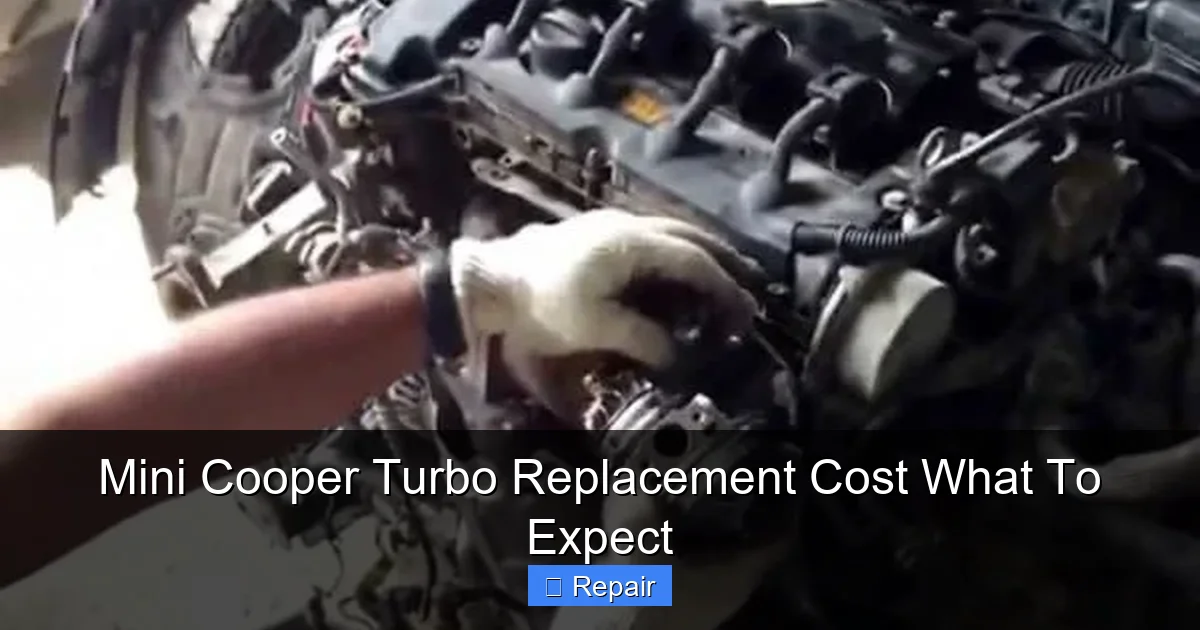
Visual guide about mini cooper turbo replacement cost
Image source: tankbig.com
Model and Year Matters
Different Mini Cooper models and engine types use different turbochargers, and some are more prone to issues or more costly to replace than others. For example, the turbo for an N14 engine (older R56 Cooper S) might have a different price point than one for an N18 engine (newer R56 Cooper S or F56 Cooper S). JCW models, being performance-tuned, can sometimes command higher prices for their specialized components. Newer models might also have more integrated parts, which can affect labor complexity and therefore, the Mini Cooper turbo replacement cost.
The Type of Turbocharger
You essentially have a few options when it comes to the replacement part itself:
- OEM (Original Equipment Manufacturer) Turbos: These are identical to the turbo that came with your Mini from the factory. They offer guaranteed fit and performance but are typically the most expensive option. They often come with a warranty from Mini.
- Aftermarket Turbos: Several reputable companies manufacture turbos designed to fit your Mini. These can sometimes be more affordable than OEM, and some even offer performance upgrades. Quality can vary, so research is crucial. Look for brands with good reviews and strong warranties.
- Remanufactured/Rebuilt Turbos: These are turbos that have been taken apart, inspected, worn components replaced, and reassembled to factory specifications. They are generally the most budget-friendly option, but ensure they come from a reputable rebuilder with a solid warranty.
Labor Costs: Where You Get It Done
This is a huge variable in the total Mini Cooper turbo replacement cost. Where you choose to have the work done will significantly impact your bill:
- Authorized Mini Dealership: Dealerships typically charge the highest labor rates. However, they use genuine OEM parts, have Mini-trained technicians, and specialized diagnostic tools. You’ll get peace of mind, but at a premium.
- Independent European Car Specialist Shop: These shops often specialize in brands like Mini and BMW. Their labor rates are generally lower than dealerships, but they still have the expertise and tools. They may offer a choice of OEM or quality aftermarket parts. This is often a good middle-ground option.
- General Auto Repair Shop: While potentially the cheapest labor rate, a general shop might not have specific Mini expertise or tools. This could lead to longer repair times or even incorrect installation, costing you more in the long run. Exercise caution here.
Additional Parts and Services
A turbo replacement often isn’t just about swapping out the turbocharger itself. There are other components that should or must be replaced at the same time:
- Oil Supply and Drain Lines: These lines are critical for lubricating and cooling the turbo. They often degrade from heat and can become clogged. Replacing them is highly recommended to prevent premature failure of the new turbo.
- Gaskets and Seals: Numerous gaskets and seals are disturbed during the replacement process. They must be replaced to ensure no leaks.
- Intercooler Cleaning: If your old turbo was failing and burning oil, your intercooler might be contaminated with oil. Cleaning or replacing it can be necessary for optimal performance.
- Wastegate Actuator: Sometimes the wastegate actuator is a separate component from the turbo and might also need replacement if it was part of the original problem.
- Fluids: New engine oil and coolant will be needed after the replacement.
Breaking Down the Mini Cooper Turbo Replacement Cost Components
To give you a clearer picture, let’s dissect the total bill into its main components. When you receive a quote for your Mini Cooper turbo replacement cost, it will typically include these line items. Understanding what each part contributes helps you analyze the overall expense.
Part Cost: The Turbocharger Itself
This is often the largest single expense. As discussed, the price varies based on whether you choose OEM, aftermarket, or remanufactured. For an OEM Mini Cooper turbocharger, you can expect to pay anywhere from $800 to $2,000 or more, depending on the specific Mini model and engine. Aftermarket options might range from $500 to $1,500, while quality remanufactured units could be found for $400 to $1,200. Remember, these are just for the turbo unit itself, not including any other parts or labor.
Labor Cost: The Hours Involved
Replacing a turbocharger on a Mini Cooper is not a quick job. It’s often located in a tight spot within the engine bay, requiring many components to be removed for access. Depending on the model, this can be a 6-10 hour job, sometimes more. At typical labor rates:
- Dealerships: $150-$250 per hour
- Independent Specialists: $100-$180 per hour
- General Shops: $80-$120 per hour
So, a 7-hour job could translate to $700 to $1,750 just in labor, depending on where you go. This is a significant portion of the overall Mini Cooper turbo replacement cost.
Ancillary Parts: The “Might-As-Wells”
These are the additional parts that are either necessary for the job or highly recommended to prevent future problems. This includes gaskets, seals, new oil feed/drain lines, nuts, bolts, clamps, and potentially new coolant and engine oil. This often adds another $150 to $500 to the total bill. Neglecting these can lead to leaks, blockages, or other issues that could damage your new turbo quickly, making it a penny-wise and pound-foolish decision to skip them.
Diagnostic Fees: Finding the Root Cause
Before any work begins, a mechanic will need to diagnose the problem accurately. This involves connecting to your Mini’s computer, checking for fault codes, and performing physical inspections. Diagnostic fees typically range from $100 to $200, though some shops may waive this fee if you proceed with the repair at their facility. It’s an essential step to ensure you’re not replacing a part that isn’t truly faulty, especially when considering the significant Mini Cooper turbo replacement cost.
A Realistic Look at Mini Cooper Turbo Replacement Cost Ranges
Now that we’ve broken down the components, let’s look at some realistic total cost ranges you might encounter for a full Mini Cooper turbo replacement cost. Keep in mind these are estimates, and local pricing can vary greatly.
Here’s a general estimate for the overall Mini Cooper turbo replacement cost, reflecting different choices for parts and labor:
| Scenario | Part Cost (Estimate) | Labor Cost (Estimate) | Ancillary Parts/Fluids (Estimate) | Total Estimated Cost Range |
|---|---|---|---|---|
| Independent Specialist (Aftermarket Turbo) | $500 – $1,000 | $700 – $1,200 | $150 – $300 | $1,350 – $2,500 |
| Independent Specialist (OEM/Remanufactured Turbo) | $800 – $1,500 | $700 – $1,200 | $150 – $300 | $1,650 – $3,000 |
| Mini Dealership (OEM Turbo) | $1,000 – $2,000+ | $1,000 – $1,750+ | $250 – $500+ | $2,250 – $4,250+ |
As you can see, the difference between taking your Mini to an independent specialist with an aftermarket part versus a dealership with an OEM part can be substantial. These figures typically include diagnostic fees if the repair is performed at the same shop.
Estimates for Different Scenarios
Let’s paint a picture with a couple of practical examples:
Example 1: Older Mini Cooper S (N14 Engine) at an Independent Shop
You have a 2008 Mini Cooper S, and the turbo is showing classic signs of failure. You decide to go to a reputable independent European car specialist. They quote you for a high-quality aftermarket turbocharger with a 2-year warranty.
- Aftermarket Turbo: $750
- Labor (7 hours @ $120/hour): $840
- Oil lines, gaskets, fluids: $250
- Total Estimated Cost: $1,840
Example 2: Newer Mini Cooper S (N18 Engine) at a Mini Dealership
Your 2012 Mini Cooper S has a failed turbo, and for peace of mind, you take it to the dealership. They insist on using an OEM turbo and offer their standard dealership warranty.
- OEM Turbo: $1,800
- Labor (8 hours @ $200/hour): $1,600
- Oil lines, gaskets, fluids: $400
- Total Estimated Cost: $3,800
These examples highlight why knowing the options and choosing wisely can save you hundreds, if not thousands, on your Mini Cooper turbo replacement cost.
Tips for Managing Your Mini Cooper Turbo Replacement Cost
Facing a big repair bill like a turbo replacement is never fun. But you’re not powerless! There are smart steps you can take to potentially reduce the Mini Cooper turbo replacement cost and ensure you’re getting quality work done without breaking the bank. Think of these as strategies to be a savvy car owner.
Get Multiple Quotes
This is probably the single best piece of advice. Don’t just settle for the first quote you receive. Call around to at least three different shops: a Mini dealership, a well-regarded independent European specialist, and perhaps another independent shop. Provide them with the exact diagnosis (if you have it) and ask for a detailed quote that breaks down parts, labor, and ancillary items. Compare these quotes carefully. You might be surprised by the range in pricing for the same job and the same Mini Cooper turbo replacement cost.
Consider Aftermarket or Remanufactured Turbos
While OEM parts offer guaranteed compatibility, reputable aftermarket or remanufactured turbos can offer significant savings. Do your homework. Look for brands known for quality (Garrett, BorgWarner, KKK/Mahle are often OEM suppliers for Mini) and ensure the part comes with a good warranty. A high-quality aftermarket turbo, installed correctly, can provide performance and longevity comparable to an OEM unit at a lower Mini Cooper turbo replacement cost.
DIY Some Prep Work? (Proceed with Caution!)
While the actual turbo replacement is a complex job best left to professionals, there might be minor things you can do to save a tiny bit on labor. For example, ensuring your engine bay is clean can help the mechanic work more efficiently. If you’re mechanically inclined and comfortable, perhaps removing a few easily accessible trim pieces that obstruct access could save a few minutes of labor. However, for the love of your Mini and your safety, do NOT attempt to replace the turbocharger yourself unless you are a certified mechanic with specialized tools and experience. This is a critical component, and incorrect installation can lead to catastrophic engine failure and a much higher Mini Cooper turbo replacement cost in the long run.
Preventative Maintenance is Key
This is perhaps the most important tip to avoid future turbo issues. Turbos are sensitive to oil quality and temperature. Stick to Mini’s recommended oil change intervals, and always use the correct synthetic oil specified for your engine. Avoid harsh driving when the engine is cold. After spirited driving, allow your engine to idle for a minute or two before shutting it off; this allows the turbo to cool down and prevents oil from coking in the bearings. Regular maintenance can extend the life of your turbo and prevent another huge Mini Cooper turbo replacement cost down the road.
Warranties and Recalls (Check if Applicable)
Before you approve any work, always check if your Mini is still under any factory warranty (powertrain, extended, or emissions). Sometimes, manufacturers extend warranties on known problem components. Also, research if there have been any recalls or technical service bulletins (TSBs) related to turbochargers for your specific Mini model and year. While a direct recall for turbo replacement is rare, related issues like oil lines or wastegate actuators might be covered, significantly reducing your out-of-pocket Mini Cooper turbo replacement cost.
Beyond the Repair: What Else to Consider
Getting your Mini’s turbo replaced is a big decision, and it often prompts owners to think about the bigger picture. Is this just a repair, or is it an opportunity? Is it even worth it? Let’s explore some other considerations once you’ve come to terms with the potential Mini Cooper turbo replacement cost.
Should You Sell or Repair?
This is a tough question many Mini owners face when a major repair like a turbo replacement comes up. It boils down to a few factors:
- Vehicle Value vs. Repair Cost: Compare the estimated Mini Cooper turbo replacement cost to the current market value of your Mini. If the repair cost is a significant percentage (say, over 50-70%) of your car’s value, it might be time to consider selling it (as-is, with the issue disclosed) or trading it in.
- Overall Condition: Is your Mini in great shape otherwise? Low mileage, well-maintained, and no other major issues? Then the turbo replacement might be a worthwhile investment to keep it going for many more years. If it has many other problems looming, it might be a money pit.
- Emotional Attachment: Let’s be honest, Mini Coopers evoke strong emotions! If you absolutely love your car and can’t bear to part with it, and the repair makes financial sense in the long run, then repairing it is often the answer.
Upgrades and Performance
If you’re already paying the significant Mini Cooper turbo replacement cost, you might see this as an opportunity. Some aftermarket turbos offer slight performance upgrades over stock, often referred to as “hybrid turbos.” If you’re considering tuning your Mini for more power, installing a slightly larger or more robust turbo during the replacement process might make sense. Discuss this with your specialist mechanic; they can advise on compatibility, tuning requirements, and the implications for engine longevity. This could add to the initial cost, but fulfill a long-term goal.
Long-Term Maintenance for Your New Turbo
Once your new turbo is installed, proper ongoing maintenance is absolutely crucial to prevent a repeat scenario. Treat your new turbo well! This means:
- Regular Oil Changes: Adhere to or even shorten recommended oil change intervals using high-quality, synthetic oil. Fresh, clean oil is the lifeblood of your turbo.
- Cool-Down Periods: Especially after enthusiastic driving, let your engine idle for a minute or two before shutting it off. This allows oil and coolant to circulate and cool the turbo, preventing oil coking in the hot bearings.
- Monitor Oil Levels: Check your oil regularly and top up as needed. Turbos are unforgiving when it comes to low oil.
- Listen for Unusual Noises: Be attentive to any new sounds – whines, rattles, or smoke. Early detection can prevent major failures.
Investing in careful maintenance will help maximize the life of your new turbo and protect your investment after paying the substantial Mini Cooper turbo replacement cost.
Facing a turbo replacement on your Mini Cooper is undoubtedly a stressful and expensive prospect. The Mini Cooper turbo replacement cost can range significantly, from under $2,000 at an independent shop using an aftermarket part to over $4,000 at a dealership with OEM components. However, by understanding the factors that influence the price, getting multiple quotes, and considering your options for parts and service, you can approach this repair with confidence and make an informed decision.
Remember, your Mini Cooper is a fantastic car, and with a healthy turbocharger, it will continue to provide that signature fun and spirited driving experience you love. While the initial sticker shock of the Mini Cooper turbo replacement cost might be daunting, proper repair and diligent future maintenance will ensure your Mini is back to its zippy self, ready for many more miles of smiles. Don’t let a failing turbo steal your Mini’s joy; equip yourself with knowledge and get it back on the road!
Frequently Asked Questions
What is the typical Mini Cooper turbo replacement cost I should expect?
The average Mini Cooper turbo replacement cost can range significantly, typically falling between $1,500 to $3,500. This estimate usually includes both the turbocharger part itself and the labor required for installation.
What factors most influence the overall Mini Cooper turbo replacement cost?
Several factors affect the total cost, including the specific Mini Cooper model and year, the type of turbo (OEM vs. aftermarket), and regional labor rates. Additional repairs, such as replacing oil lines or intercooler components, can also increase the final bill.
What are the common symptoms indicating my Mini Cooper’s turbo might need replacement?
Key symptoms include a noticeable loss of power or acceleration, excessive smoke from the exhaust (especially blue or white), and unusual whining or rattling noises from under the hood. You might also notice a “check engine” light illuminating on your dashboard.
Can I drive my Mini Cooper if I suspect the turbo needs replacing?
While you might be able to drive a short distance, it’s generally not recommended to continue driving with a failing turbo. Doing so can cause further damage to the engine, catalytic converter, or other critical components, potentially leading to much more expensive repairs.
Does choosing an OEM versus an aftermarket turbo significantly affect the Mini Cooper turbo replacement cost?
Yes, opting for an Original Equipment Manufacturer (OEM) turbocharger typically results in a higher Mini Cooper turbo replacement cost than choosing an aftermarket unit. While aftermarket options can save money upfront, it’s crucial to select a reputable brand to ensure reliability and performance comparable to OEM parts.
How long does the Mini Cooper turbo replacement process usually take at a service center?
A professional Mini Cooper turbo replacement typically takes between 4 to 8 hours of labor, depending on the mechanic’s experience and the specific model. Including diagnostic time and potential additional repairs, your car might be at the service center for a full day or sometimes longer.