How Much Does It Cost To Fix Engine Compression 2025 Guide
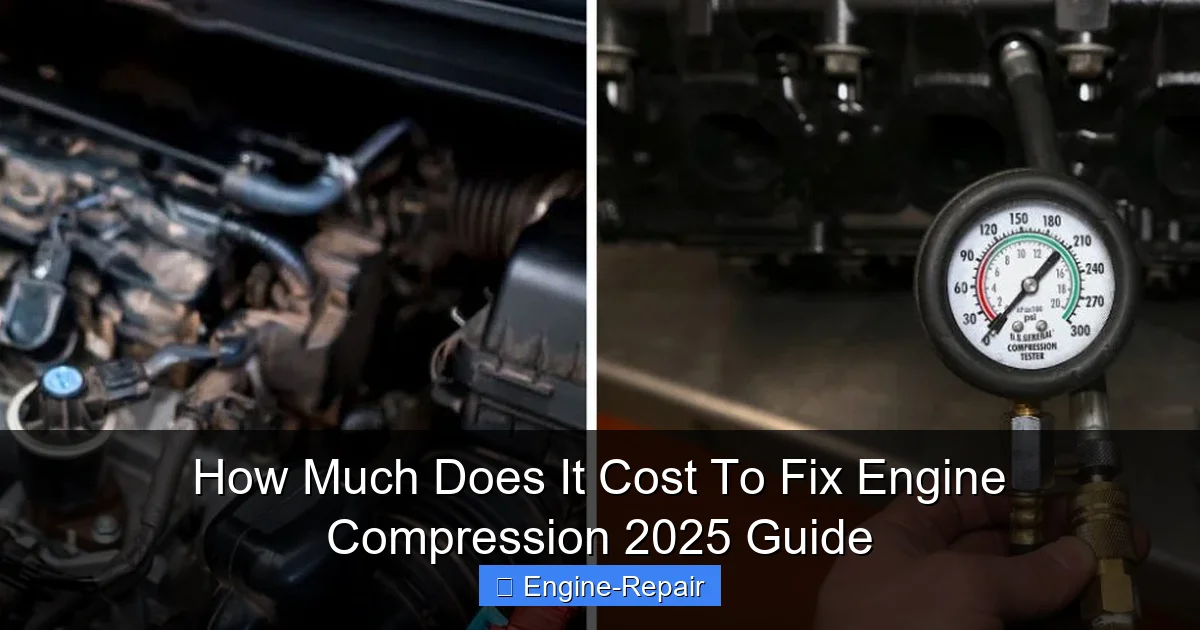
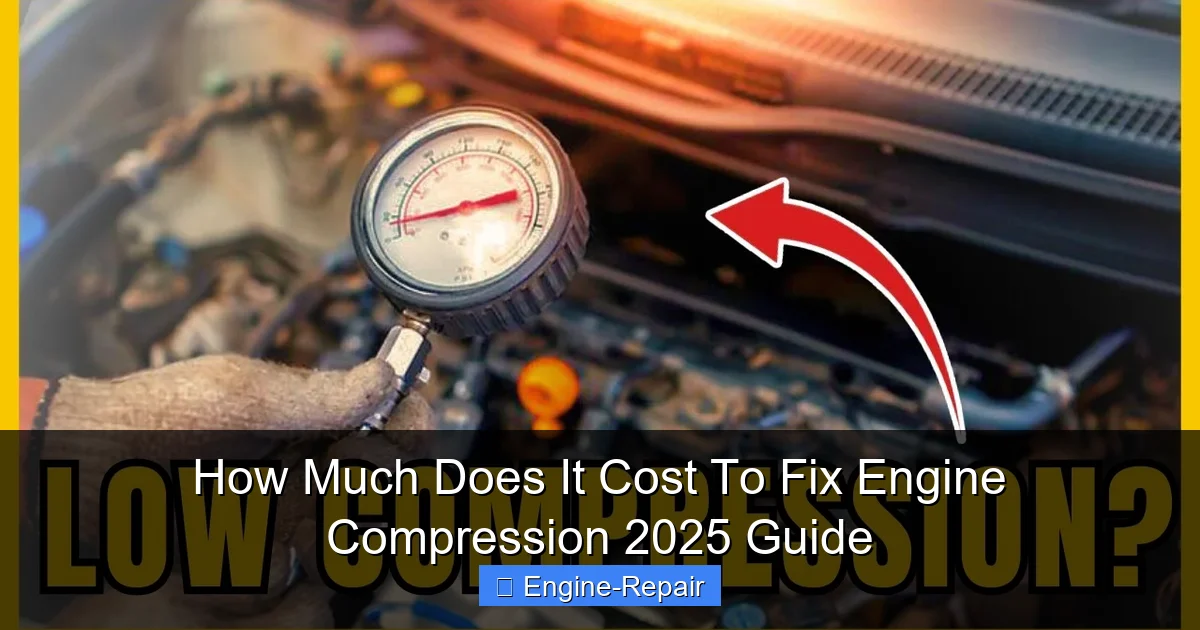
Featured image for how much does it cost to fix engine compression
Image source: jeepfixes.com
Fixing engine compression in 2025 can range significantly, typically from $500 for minor issues like a head gasket up to $4,000+ for more severe problems involving valves or piston rings. The exact cost hinges on diagnostic fees, labor rates, specific parts needed, and your vehicle’s make and model. Addressing these issues promptly is crucial to prevent further engine damage and costly repairs.
How Much Does It Cost To Fix Engine Compression 2025 Guide
The rhythmic hum of a well-functioning engine is music to any car owner’s ears. It signifies power, reliability, and the promise of a smooth journey. However, when that hum turns into a struggle, often accompanied by a noticeable dip in performance, one of the primary culprits could be an issue with your engine’s compression. Engine compression is the very heart of an internal combustion engine’s ability to create power, and without adequate compression, your vehicle is simply not going to perform as it should.
Loss of engine compression can manifest in a myriad of frustrating ways: misfires, excessive oil consumption, a distinct lack of power, or even a complete refusal to start. These aren’t just minor inconveniences; they are clear indicators of underlying problems that, if left unaddressed, can lead to catastrophic engine failure and far more expensive repairs. As we look towards 2025, understanding the potential costs involved in diagnosing and fixing these critical issues is more important than ever for budget-conscious car owners.
This comprehensive guide aims to demystify the complexities and costs associated with restoring proper engine compression. We’ll delve into everything from the diagnostic process to common causes, detailed repair breakdowns, and crucial tips for both reducing costs and preventing future issues. By the end, you’ll have a clearer picture of what to expect financially when facing a compromised engine.
Key Takeaways
- Cost Varies Greatly: Repair price depends on the specific cause and severity.
- Diagnose Accurately First: Pinpoint the issue before any expensive repairs begin.
- Expect Wide Range: Minor fixes under $500; engine rebuilds over $4,000.
- Get Multiple Quotes: Always compare estimates from several reputable mechanics.
- Labor Is Major Factor: Shop rates significantly impact overall repair cost.
- DIY Saves Money: Minor gasket or spark plug fixes are possible.
- Preventative Care Helps: Regular maintenance avoids costly compression issues.
Quick Answers to Common Questions
What’s the typical range for fixing engine compression issues?
Generally, **how much it costs to fix engine compression** can range from $1,000 to $4,000 or even more, depending on the severity of the problem and the specific parts required. Minor fixes like a simple gasket replacement will be on the lower end, while major overhauls can push towards the higher figures.
What factors most influence the total cost of engine compression repair?
Several factors impact **how much it costs to fix engine compression**, including your vehicle’s make and model, local labor rates, and the root cause of the problem—whether it’s a blown head gasket, worn piston rings, or valve issues. The complexity of the repair and the parts needed are the biggest drivers of cost.
Can I save money by attempting a DIY fix for engine compression?
While DIY might seem appealing, engine compression repair is complex and typically requires specialized tools and expertise, so **how much it costs to fix engine compression** yourself could end up being more expensive if done incorrectly. It’s generally recommended to consult a professional to ensure a lasting and safe repair.
What are the most common (and costly) problems causing low engine compression?
The most common culprits for low engine compression include a blown head gasket, worn piston rings, or damaged valves, and these significantly dictate **how much it costs to fix engine compression**. Head gasket replacements typically run from $1,000-$2,500, while more extensive repairs like new piston rings can easily exceed $2,500 due to intensive labor.
Should I fix low engine compression or consider an engine replacement or new car?
That’s a great question about value! **How much it costs to fix engine compression** should be weighed against your vehicle’s overall condition, age, and market value; if the repair cost is more than half the car’s value, or if there are other major issues, an engine replacement or new car might be a more financially sound decision.
📑 Table of Contents
- Understanding Engine Compression and Its Importance
- Diagnosing Low Engine Compression: The First Step
- Common Causes of Low Engine Compression and Their Fixes
- Cost Breakdown: Parts and Labor to Fix Engine Compression
- The “When to Repair vs. When to Replace” Dilemma
- Tips for Reducing Engine Compression Repair Costs and Preventing Issues
- Conclusion
Understanding Engine Compression and Its Importance
Before diving into costs, it’s essential to grasp what engine compression truly is and why it holds such a pivotal role in your vehicle’s operation.
What is Engine Compression?
In essence, engine compression refers to the process where the piston moves upwards in the cylinder, squeezing the air-fuel mixture into a smaller volume. This compression is crucial because it significantly raises the temperature and pressure of the mixture, making it highly combustible when the spark plug fires. Without adequate compression, the combustion process is inefficient, leading to a significant loss of power.
Why is Compression Crucial?
Good engine compression is vital for several reasons:
- Power Production: Higher compression leads to a more powerful explosion, translating directly into more horsepower and torque.
- Fuel Efficiency: Efficient combustion means less fuel is wasted, improving your vehicle’s miles per gallon.
- Smooth Operation: Balanced compression across all cylinders ensures the engine runs smoothly and quietly, preventing misfires and vibrations.
- Reduced Emissions: Complete combustion produces fewer harmful emissions.
Signs of Low Engine Compression
Recognizing the symptoms of low engine compression early can save you from more extensive damage. Look out for:
- Engine Misfires: A common symptom, indicating one or more cylinders aren’t firing correctly.
- Reduced Power & Acceleration: Your car feels sluggish, struggling to accelerate or maintain speed.
- Excessive Oil Consumption: Worn components (like piston rings or valve seals) can allow oil to enter the combustion chamber.
- Rough Idling: The engine might shake or vibrate abnormally when at a standstill.
- Smoke from the Exhaust: Blue smoke usually indicates burning oil, a sign of internal engine wear.
- Difficulty Starting: The engine may crank for a long time or fail to start altogether.
Diagnosing Low Engine Compression: The First Step
Accurate diagnosis is paramount before you can effectively fix engine compression issues. A qualified mechanic will employ several tests to pinpoint the problem’s source.
Visual guide about how much does it cost to fix engine compression
Image source: i.ytimg.com
Compression Test
This is the most common and initial test. A specialized gauge is screwed into each spark plug hole, and the engine is cranked. The gauge measures the pressure built up in each cylinder. Readings that are significantly lower than the manufacturer’s specifications or vary widely between cylinders (typically more than 10-15%) indicate a problem. A “dry” test measures raw compression, while a “wet” test (with a small amount of oil added to the cylinder) can help distinguish between worn piston rings and valve issues.
Leak-Down Test
More precise than a compression test, the leak-down test uses compressed air to pressurize each cylinder when its piston is at the top dead center. The mechanic listens for escaping air to identify the exact source of the leak:
- Through the exhaust: Indicates a leaky exhaust valve.
- Through the intake: Points to a leaky intake valve.
- Into the crankcase (oil filler cap/dipstick tube): Suggests worn piston rings.
- Into an adjacent cylinder or radiator: Implies a blown head gasket or cracked block/head.
Visual Inspection & Bore Scope
Sometimes, visual inspection using a bore scope (a small camera inserted into the cylinder) can reveal physical damage like a cracked piston, damaged valve, or scoring on the cylinder walls, which directly impacts engine compression.
Diagnostic Costs
The cost for these diagnostic tests typically ranges from $100 to $300, depending on your location, the vehicle’s make/model, and the shop’s labor rates. This initial investment is crucial; it prevents guessing games and ensures you only pay to fix engine compression where the problem truly lies.
Common Causes of Low Engine Compression and Their Fixes
Once diagnosed, the next step is identifying the specific component failure responsible for the low engine compression. The repair costs vary dramatically based on the root cause.
Worn Piston Rings
Piston rings create a seal between the piston and the cylinder wall. Over time, they wear down, allowing combustion gases to escape into the crankcase.
Fix: This often requires a partial or full engine rebuild, involving removing the engine, disassembling it, replacing the piston rings (and sometimes pistons and cylinder liners), and honing the cylinder walls. This is a labor-intensive repair.
Worn or Damaged Valves or Valve Seats
Valves seal the combustion chamber during the compression and power strokes. If valves are bent, warped, carbon-fouled, or their seats are damaged, they won’t seal properly.
Fix: A “valve job” or cylinder head service is needed. This involves removing the cylinder head, cleaning/machining the valves and seats, replacing valve guides/seals, and sometimes replacing the valves themselves. In severe cases, the entire cylinder head might need replacement.
Blown Head Gasket
The head gasket seals the cylinder head to the engine block, preventing combustion gases, coolant, and oil from mixing or escaping. A blown head gasket often leads to loss of engine compression in one or more cylinders, coolant loss, and sometimes engine overheating.
Fix: Replacement of the head gasket. This requires removing the cylinder head(s), cleaning both surfaces, and installing a new gasket. The cylinder head may also need to be checked for warping and machined flat if necessary.
Cracked Cylinder Head or Engine Block
These are more severe and less common issues, often resulting from extreme overheating or manufacturing defects. Cracks allow combustion gases to escape, leading to a significant drop in engine compression.
Fix: A cracked cylinder head can sometimes be repaired via welding, but often requires replacement. A cracked engine block is usually catastrophic and often necessitates engine replacement, as welding an engine block is complex and not always reliable or cost-effective.
Timing Belt/Chain Issues
If the timing belt or chain slips or breaks, it can cause valves to collide with pistons, leading to bent valves and severely compromised engine compression.
Fix: This involves replacing the damaged valves, head gasket, and often the cylinder head itself, in addition to replacing the timing belt/chain and associated components.
Cost Breakdown: Parts and Labor to Fix Engine Compression
The total cost to fix engine compression is a combination of parts and labor. These figures can fluctuate significantly based on vehicle make and model, engine type (4-cylinder vs. V6/V8), geographical location, and the specific repair shop.
Labor Costs
Labor is often the largest component of engine repair costs. Mechanics typically charge an hourly rate, which can range from $90 to $180+ per hour. Repairs involving engine disassembly, such as piston ring replacement or a valve job, are extremely labor-intensive, often requiring 10-30+ hours of work.
Parts Costs
Parts prices vary widely:
- Head Gasket Kit: $50 – $250 (for quality aftermarket or OEM parts).
- Piston Rings (set): $100 – $400.
- Valves (per valve): $10 – $50.
- Cylinder Head (remanufactured/new): $300 – $2,000+ (per head, some engines have two).
- Engine Block (new/remanufactured): $1,500 – $5,000+.
- Miscellaneous: Gaskets, seals, fluids, bolts, machine shop services (e.g., head milling), and other small components can add several hundred dollars.
Geographical Variations
Costs can be higher in metropolitan areas or regions with a higher cost of living, where labor rates and overhead expenses for shops are greater.
Estimated Costs to Fix Engine Compression (2025 Guide)
Below is a table offering a general range for common repairs affecting engine compression, including parts and labor estimates for 2025. These are broad estimates and can vary.
| Type of Repair | Estimated Parts Cost | Estimated Labor Cost | Total Estimated Cost Range |
|---|---|---|---|
| Blown Head Gasket Repair | $100 – $350 | $600 – $1,500 | $700 – $1,850+ |
| Valve Job / Cylinder Head Service | $200 – $800 | $800 – $2,000 | $1,000 – $2,800+ |
| Worn Piston Rings (Minor Rebuild) | $300 – $1,000 | $1,500 – $4,000 | $1,800 – $5,000+ |
| Cracked Cylinder Head Replacement | $300 – $2,000+ | $800 – $2,000 | $1,100 – $4,000+ |
| Engine Block Repair/Replacement (Severe) | $1,500 – $5,000+ | $2,000 – $5,000+ | $3,500 – $10,000+ |
| Timing-Related Valve Damage Repair | $300 – $1,500 | $1,000 – $3,000 | $1,300 – $4,500+ |
*These estimates are for 2025 and can vary significantly based on vehicle make, model, engine type, parts availability (OEM vs. aftermarket), and shop labor rates. Always get a detailed quote specific to your vehicle.
The “When to Repair vs. When to Replace” Dilemma
When faced with a significant repair to fix engine compression, especially on an older vehicle, the question often arises: Is it worth fixing, or should I replace the car entirely?
Factors to Consider
- Vehicle Age and Mileage: Older cars with very high mileage might not justify an expensive engine repair.
- Overall Condition: Does the rest of the car (transmission, suspension, body) have significant issues? If so, investing heavily in the engine might be throwing good money after bad.
- Market Value: Compare the repair cost to the car’s current market value. If the repair exceeds 50-75% of the car’s value, replacement might be a better financial decision.
- Your Budget and Needs: Can you afford a new or newer used car? Is this vehicle essential for your daily life?
- Emotional Attachment: Sometimes, the sentimental value of a car outweighs the purely financial decision.
For example, if you have a 10-year-old car worth $5,000 and the repair to fix engine compression is $3,000 for a head gasket, it might be a tough call. However, if the repair is $8,000 for a full engine rebuild, and the car’s value is still $5,000, replacing the vehicle is almost certainly the more sensible option.
Long-Term Value
A well-repaired engine can significantly extend the life of your vehicle, potentially saving you the cost of a down payment and higher monthly payments on a new car. Consider how many more years you expect to get out of the vehicle after the repair.
Tips for Reducing Engine Compression Repair Costs and Preventing Issues
While some failures are unavoidable, there are strategies to potentially lower repair costs and, more importantly, prevent major engine compression problems in the first place.
Get Multiple Quotes
Don’t settle for the first estimate. Contact at least two or three reputable repair shops to compare their diagnostic findings, proposed repairs, and pricing. Ensure they provide a detailed breakdown of parts and labor.
Ask About Rebuilt or Aftermarket Parts
OEM (Original Equipment Manufacturer) parts are often the most expensive. Discuss with your mechanic whether high-quality aftermarket or remanufactured parts are suitable for your specific repair. This can significantly reduce parts costs without compromising reliability, especially for components like cylinder heads.
Consider a Remanufactured Engine
For extensive internal engine damage, a full engine rebuild can be very costly. Sometimes, installing a professionally remanufactured engine (which comes with a warranty) can be a more cost-effective and reliable alternative than trying to repair a severely damaged original engine. The cost to install a remanufactured engine can range from $3,000 to $8,000+, but provides a “like-new” engine.
Preventative Maintenance is Key
This is arguably the most crucial tip. Adhering to your vehicle’s maintenance schedule can prevent many compression-related issues:
- Regular Oil Changes: Fresh oil lubricates components, prevents wear on piston rings, and helps keep valves clean.
- Monitor Coolant Levels: Proper cooling prevents overheating, a leading cause of warped cylinder heads and blown head gaskets.
- Timely Tune-ups: Replacing spark plugs and checking ignition components ensures efficient combustion and puts less stress on the engine.
- Check Timing Belt/Chain: Follow manufacturer recommendations for inspection and replacement to avoid catastrophic valve damage.
Don’t Ignore Warning Signs
Addressing minor issues early, like an overheating engine or a persistent misfire, can prevent them from escalating into major problems requiring extensive repairs to fix engine compression. The sooner you diagnose and repair, the less damage might be incurred, ultimately saving you money.
Conclusion
Addressing issues with engine compression can be one of the more daunting and potentially expensive repairs a car owner faces. From worn piston rings to a cracked cylinder head, the causes are varied, and the fixes range from moderately costly to requiring a substantial investment, often mirroring the value of the vehicle itself. As we’ve explored in this 2025 guide, understanding the diagnostic process, the common culprits, and the associated costs is your first line of defense.
While the prospect of significant engine repair might be intimidating, remember that informed decision-making is key. Obtaining thorough diagnostics, comparing repair quotes, and weighing the long-term value against outright replacement are all critical steps. Most importantly, consistent preventative maintenance remains your best strategy for avoiding severe compression loss and keeping your engine running strong, efficiently, and economically for years to come. Investing in your engine’s health today can save you thousands down the road.
Frequently Asked Questions
How much does it typically cost to fix engine compression issues in 2025?
The cost to fix engine compression can vary significantly, ranging from a few hundred dollars for minor issues like a faulty spark plug gasket to several thousand for major repairs such as replacing piston rings or cylinder heads. On average, you might expect to pay between $1,000 and $4,000, depending on the underlying problem and vehicle make and model.
What factors primarily influence the total cost of repairing low engine compression?
Several factors affect the total repair cost, including the specific cause of the compression loss (e.g., worn piston rings, burnt valves, head gasket failure), the make and model of your vehicle, and labor rates in your area. The cost of parts and the complexity of the repair job also play a significant role.
Is the diagnostic test for engine compression included in the overall repair estimate?
Generally, the diagnostic test for engine compression is a separate charge from the repair itself. This initial assessment, which often includes a compression test, leak-down test, and visual inspection, typically costs between $100 and $250. This fee helps accurately identify the root cause before any repairs begin.
What are the most common causes of low engine compression, and how do their repairs impact the cost?
Common causes include worn piston rings, burnt or bent valves, a cracked cylinder head, or a blown head gasket. Repairs for a head gasket might range from $500-$2,000, while more extensive issues like replacing piston rings or an entire cylinder head can push costs upwards of $2,500 to $5,000 or more due to extensive labor and part expenses.
Can I fix low engine compression myself to save money, or should I always hire a professional?
While some very minor issues causing low compression, like a loose spark plug, might be DIY-friendly, most engine compression problems require specialized tools, in-depth mechanical knowledge, and significant experience. For safety and ensuring a proper fix, it’s generally recommended to consult a professional mechanic, especially with complex engine compression repairs.
When is fixing engine compression no longer a cost-effective solution for my vehicle?
It becomes less cost-effective to fix engine compression when the repair cost approaches or exceeds the current market value of your vehicle, especially if it’s an older model with other existing problems. If the engine compression issue points to extensive internal damage, sometimes replacing the engine or the vehicle itself is a more financially sound decision.